NavVis MLX vs Leica BLK2GO: Handheld SLAM Scanner Comparison
An expert comparison to help you choose the right equipment for your project.
| Feature | NavVis MLX | Leica BLK2GO |
|---|---|---|
| Range | Up to 50m | 0.5–25m |
| Accuracy | 5mm local, 1 sigma (dedicated test environment) | 6–15mm relative (20mm absolute indoor) |
| Point Rate | 640,000 pts/sec | 420,000 pts/sec |
| Camera | 4 × 12 MP panoramic + 2 × 2 MP visual odometry | 12 MP + 3 × 4.8 MP panoramic |
| SLAM | LiDAR SLAM augmented by visual odometry | Continuous SLAM |
| Weight | 3.6 kg (incl. battery) | 0.65 kg (0.775 kg incl. battery) |
Pricing shown reflects average US rates — indicative ranges, not a quote. Actual costs vary by location based on local market conditions, regulations, and project logistics — both within the US and internationally. Get a custom quote
NavVis MLX
Premium Handheld Mobile Scanner
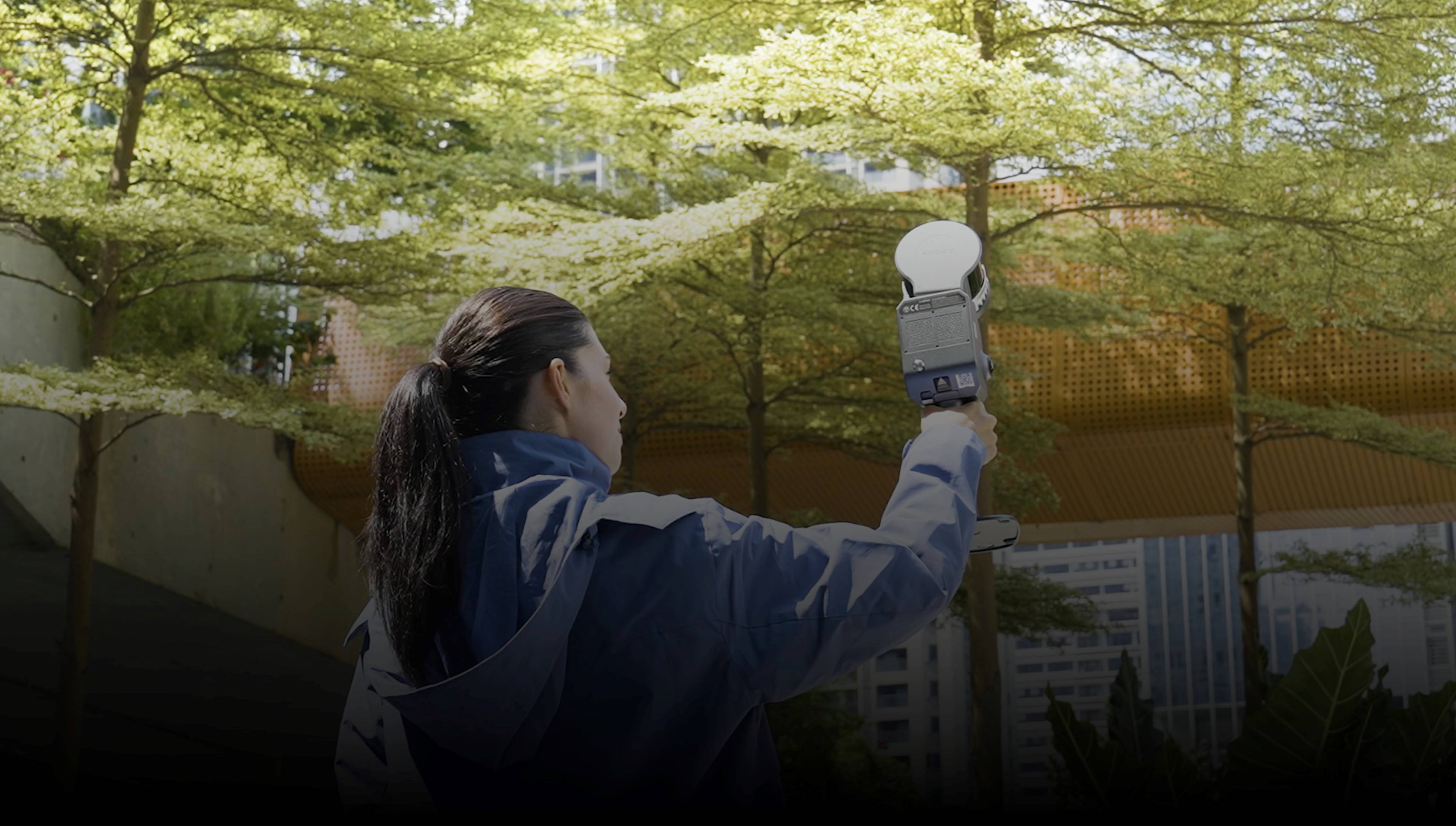
The NavVis MLX is a handheld mobile scanner built on a 32-layer LiDAR, capturing 640,000 points per second out to 50m. NavVis publishes 5mm local accuracy in a dedicated test environment (1 sigma), and pairs four 12 MP panoramic cameras and two 2 MP visual-odometry cameras with LiDAR SLAM. The cost of that capability is mass: at 3.6 kg it is the heavier of the two handhelds by a wide margin.
Pros
- 50m operational range — twice the BLK2GO reach
- Publishes 5mm local accuracy (1 sigma) in a dedicated test environment
- 640,000 pts/sec — roughly 52% more points per second than the BLK2GO
- Four 12 MP panoramic cameras plus two visual-odometry cameras
- Supports physical ground and wall control points to constrain absolute accuracy
- Excellent for tight spaces and one-handed operation
Cons
- Heavier than the BLK2GO (3.6 kg vs 0.775 kg with battery)
- 45-minute battery that cannot be swapped mid-scan
- Mass becomes a factor over long continuous capture sessions
Best For
Leica BLK2GO
Handheld SLAM Scanner
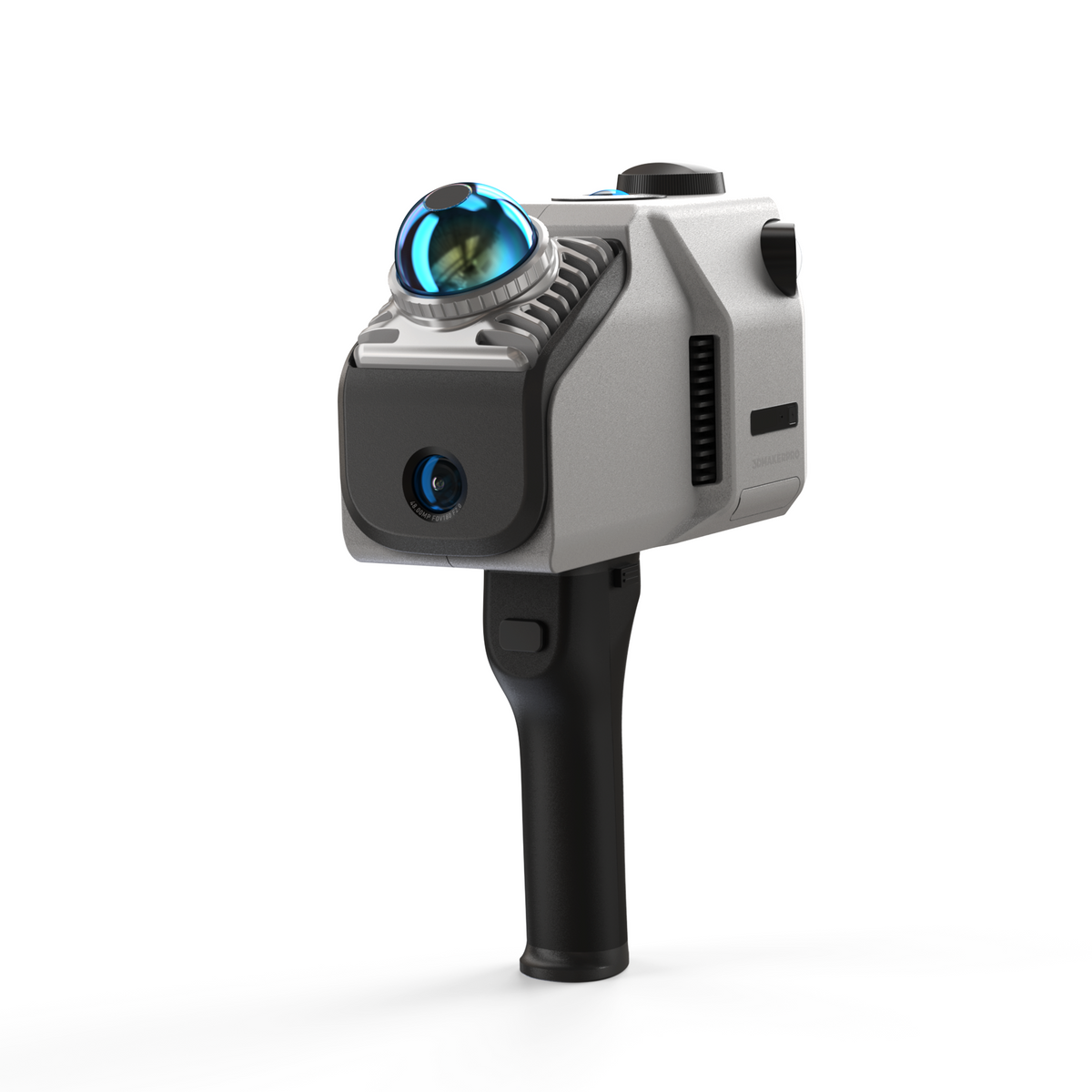
The Leica BLK2GO is a 0.775 kg handheld SLAM scanner designed for continuous walkthrough capture at walking pace, recording 420,000 points per second with a 12 Mpixel camera and a three-camera 4.8 Mpixel panoramic vision system. Leica publishes 6–15mm relative accuracy, 20mm absolute position accuracy indoors and a 0.5–25m range — but the low mass makes long, uninterrupted walkthroughs far less tiring than a heavier unit.
Pros
- Walk-through scanning at walking pace
- Ultra-portable handheld at 0.775 kg with battery — about 4.6× lighter than the MLX
- Fast continuous capture with a natural operator workflow
- Low fatigue over long, multi-floor walkthroughs
- Simple to deploy for preliminary and repeat visits
Cons
- 25m range — half the NavVis MLX's 50m
- Looser accuracy than tripod scanners, and behind the MLX at 6–15mm relative
- Not for precision work
- Lower panoramic imaging resolution than the MLX's four 12 MP cameras
Best For
Our Expert Verdict
The NavVis MLX leads on every capture metric — twice the range, a tighter published accuracy figure (5mm local versus 6–15mm relative), 52% more points per second, and higher panoramic imaging resolution. The Leica BLK2GO answers with one number that matters just as much in handheld work: 0.775 kg against 3.6 kg. Handheld scanning is carried, not set up, so operator mass budget is a real constraint rather than a footnote. Pick the MLX when the data has to be defensible or the space is large; pick the BLK2GO when the job is a fast, room-by-room interior walkthrough.
Choose NavVis MLX if...
Choose the NavVis MLX when range and accuracy carry the project — larger interiors, plant and mechanical spaces, ceiling voids, and any capture that will be tied to physical control points. Its 50m operational range means open volumes such as warehouses and atria need fewer passes.
Choose Leica BLK2GO if...
Choose the Leica BLK2GO for fast interior documentation where the operator is walking continuously for long stretches and 25m of reach is sufficient — residential and small commercial walkthroughs, preliminary surveys, and repeat visits where speed and low fatigue beat millimetres.
Download the Spec Sheets
Original manufacturer documents, free with no email required — verified against each manufacturer's live copy.
Browse the full library: Equipment Spec Sheets & Downloads →
Frequently Asked Questions
Which Leica BLK2GO specification applies?
Leica currently publishes two BLK2GO sheets; the 2025 shop sheet states 6–15 mm relative accuracy, the 05/2021 datasheet ±10 mm indoor. The figures quoted here are from the currently published shop sheet.
What is the biggest difference between the NavVis MLX and the Leica BLK2GO?
Weight against reach. The MLX has twice the operational range (50m versus 25m) and a tighter published accuracy figure, but the BLK2GO weighs 0.775 kg with its battery against the MLX's 3.6 kg. Over a full day of continuous handheld capture, that is the difference an operator actually feels.
Which handheld scanner is more accurate?
The NavVis MLX. NavVis publishes 5mm local accuracy (1 sigma) in a dedicated test environment; Leica publishes 6–15mm relative accuracy and 20mm absolute position accuracy indoors for the BLK2GO. Both figures are local or relative, and both manufacturers state that absolute accuracy depends on the environment. NavVis also supports physical ground and wall control points to constrain absolute accuracy, though it publishes no number for the result.
How much heavier is the NavVis MLX?
The MLX weighs 3.6 kg against 0.775 kg for the BLK2GO with its battery — roughly 4.6 times heavier. For short bursts this is irrelevant; across a full day of continuous handheld capture it is the main ergonomic difference between the two.
Which captures more points per second?
The NavVis MLX, at 640,000 points per second against 420,000 for the BLK2GO — about 52% more.
Which produces better imagery?
The NavVis MLX. It carries four 12 MP panoramic cameras (plus two 2 MP visual-odometry cameras), while the BLK2GO pairs one 12 Mpixel camera with a three-camera 4.8 Mpixel panoramic vision system. Where colourised point clouds or panoramic imagery are part of the deliverable, the MLX has more to work with.
Can either of these replace a tripod-mounted laser scanner?
Not for precision work. Both are SLAM handhelds quoted in millimetres of relative accuracy rather than the sub-3mm figures of survey-grade terrestrial scanners. They are best used for speed and coverage, with a terrestrial scanner brought in for areas that need tighter tolerance.
Professional Equipment In This Comparison
The professional equipment in this comparison, compared spec by spec. Specifications shown are the manufacturers' published figures. Models THE FUTURE 3D operates are identified on their own pages.
NavVis MLX
Premium Handheld Mobile Scanner
Leica BLK2GO
Handheld SLAM Scanner
Similar Equipment You Might Compare
Professional Services Using This Equipment
The Future 3D delivers these professional services with its own equipment fleet — each service page names the instruments we deploy.
3D Virtual Tours
Immersive Matterport virtual tours for properties and spaces
3D Laser Scanning
Millimeter-accurate point cloud capture with Trimble and NavVis
Scan-to-BIM
BIM-conversion-ready 3D laser scan data in E57, RCP, LAS, and OBJ
Digital Twins
Living 3D models with real-time IoT integration
As-Built Documentation
Registered point clouds, 360° panoramas, and PDF reports from 3D scanning
Google Street View
Google Trusted Photographer services for business interiors
Industries That Benefit From This Technology
NavVis MLX and Leica BLK2GO technology drives innovation across these key industries.
Schools & Education
Virtual campus tours, facility documentation, and safety planning
Real Estate
Immersive property tours and marketing assets
Retail
Store planning and virtual store tours
Hospitality
Hotel virtual tours and event space showcases
Insurance
Property documentation and claims support
Property Management
Portfolio documentation and move-in/out inspections
Available Nationwide
The Future 3D provides professional 3D scanning services across the United States.
Florida (Headquarters)
Northeast
West Coast
South & Midwest
Need Help Choosing?
Our experts can recommend the right equipment for your specific project requirements.