3DMakerPro Eagle vs Xgrids L2 Pro: Consumer vs Professional Gaussian Splatting
An expert comparison to help you choose the right equipment for your project.
| Feature | 3DMakerPro Eagle | Xgrids Lixel L2 Pro |
|---|---|---|
| Point Rate | 200,000 pts/sec | 640,000 pts/sec (32-ch) / 320,000 pts/sec (16-ch) |
| Range | 40–70m radius (up to 80-140m total) | 0.5–120m (standard) / up to 300m (select 32-ch model) |
| Accuracy | 2cm at 10m / 3cm at 20m / 5cm at 40m | <1–2cm relative; <3cm absolute |
| FOV | 360° horizontal × 59° vertical | 360° × 270° |
| Cameras | 1 × 48MP fisheye (Standard) / 4 × 48MP fisheye, 8K panoramic (Max) | 2 × 48MP panoramic (RGB colorization via LixelUpSample) |
| Laser | Class 1 eye-safe, 905nm | Class 1 eye-safe, 905nm |
| Connectivity | Dual USB-C, Wi-Fi 5 | USB-C |
| Weight | 1.5kg | 1.7kg (without battery) |
| Editions | Standard (1 × 48MP fisheye) / Max (4 × 48MP fisheye) | - |
Pricing shown reflects average US rates — indicative ranges, not a quote. Actual costs vary by location based on local market conditions, regulations, and project logistics — both within the US and internationally. Get a custom quote
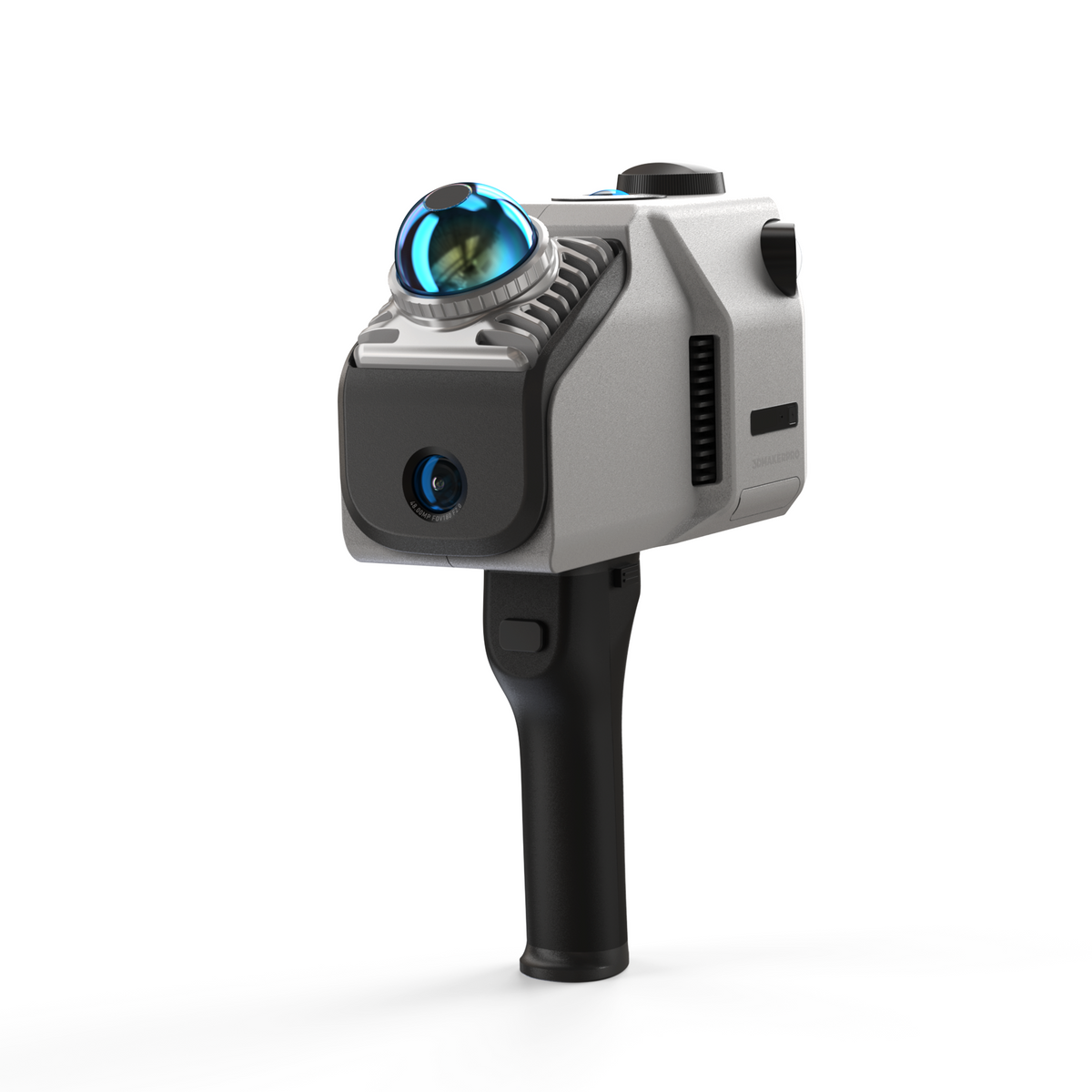
3DMakerPro Eagle
Consumer Spatial LiDAR Scanner with Gaussian Splatting Output
The 3DMakerPro Eagle is a consumer-grade handheld spatial scanner capturing 200,000 LiDAR points/sec with a 48MP fisheye camera, a 40-70m radius range, and native Gaussian Splatting output in standard PLY via RayStudio. A Max edition adds four 48MP cameras; see 3DMakerPro's store for current pricing. It is the low-cost entry point into GS-capable spatial scanning.
Pros
- Native Gaussian Splatting PLY output via RayStudio
- Affordable entry point for GS-capable hardware
- Standard PLY and OBJ output — compatible with any GS viewer
- Built-in 3.5-inch live preview screen
- Lightweight and portable (1.5kg)
- HDR support (3-5 EV) for challenging lighting
- Mobile scanning while walking, vehicle- or drone-mounted (3DMakerPro cites data quality maintained at speeds up to 20 km/h in its marketing copy, not in its spec table)
Cons
- Lower accuracy (2cm at 10m) than professional scanners
- Accuracy degrades significantly beyond 20m (3cm at 20m, 5cm at 40m)
- Consumer-grade build quality
- Smaller ecosystem and community than Leica/Trimble/FARO
- RayStudio software less mature than established processing tools
- No BIM plugin — GS data has no direct route into Revit
Best For
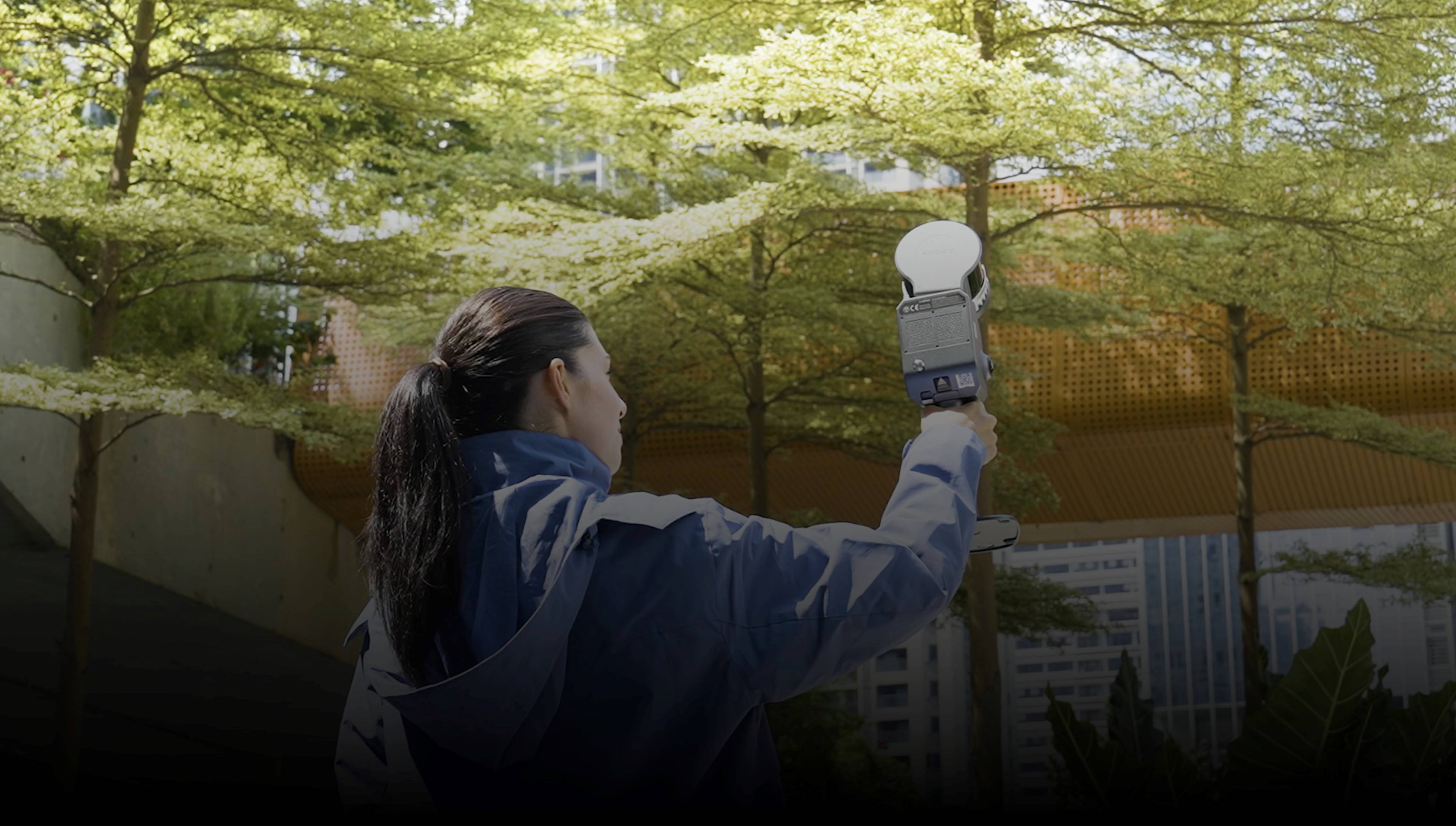
Xgrids Lixel L2 Pro
Professional Handheld SLAM Scanner with Native Gaussian Splatting
The Xgrids Lixel L2 Pro is a 32-channel handheld SLAM scanner capturing 640,000 points/sec with <1-2cm relative accuracy, dual 48MP panoramic cameras, and native Gaussian Splatting via Lixel CyberColor (LCC) software. It ships the only GS-to-BIM Revit plugin on the market and SDKs for Unity, Unreal Engine, and WebGL, positioning it as the professional tier of GS-capable capture at roughly $15,000-$25,000 per system.
Pros
- Native Gaussian Splatting output via Lixel CyberColor (LCC) software
- Only GS-to-BIM Revit plugin on the market (LCC for Revit)
- SDKs for Unity, Unreal Engine, and WebGL — game engine ready
- High point density (up to 1M pts/m² at 1mm spacing) without post-processing
- Contributing member to the Khronos glTF KHR_gaussian_splatting specification
- Range to 120m standard, up to 300m on select 32-channel models
- 1 TB onboard SSD and IP54 sealing
Cons
- Proprietary GS format (LCC) — not standard PLY
- Processing: roughly 1 hour per 3-minute scan in LCC
- Higher price point (~$15,000-$25,000 system)
- Requires the LCC software ecosystem for GS features
- Indoor and building-scale focus — not for large outdoor areas
Best For
Our Expert Verdict
The gap here is roughly three to seven times in price and a full tier in capability. The 3DMakerPro Eagle brings native Gaussian Splatting within reach, outputs standard PLY and OBJ that any GS viewer can open, and can be carried, driven, or flown. The Xgrids Lixel L2 Pro costs roughly $15,000-$25,000 and returns more than 3× the point rate, tighter accuracy that holds at distance (<1-2cm relative versus 2cm at 10m degrading to 5cm at 40m), dual 48MP cameras, and the only GS-to-BIM Revit plugin available. The honest split is the deliverable: visualization and learning versus professional GS work that has to survive a client review or enter a BIM model.
Choose 3DMakerPro Eagle if...
Choose the 3DMakerPro Eagle when budget defines the project — small sites and rooms, real estate and property documentation, teaching and training, or any workflow where standard PLY and OBJ output into a GS viewer is the whole requirement.
Choose Xgrids Lixel L2 Pro if...
Choose the Xgrids Lixel L2 Pro when GS is a professional deliverable — building-scale capture, accuracy that has to hold beyond 20m, dense colorized point clouds alongside the splat scene, or GS data that must land in Revit or a game engine.
Download the Spec Sheets
Original manufacturer documents, free with no email required — verified against each manufacturer's live copy.
Browse the full library: Equipment Spec Sheets & Downloads →
Frequently Asked Questions
How large is the price difference?
Substantial. The Xgrids Lixel L2 Pro sits at roughly $15,000-$25,000 as a system, several times the 3DMakerPro Eagle. See 3DMakerPro's store for current Eagle pricing — it changes with promotions and edition.
Which is more accurate?
The L2 Pro, and the gap widens with distance. The L2 Pro is specified at <1-2cm relative and <3cm absolute across a 0.5-120m range. The Eagle is 2cm at 10m, 3cm at 20m, and 5cm at 40m, so accuracy degrades as the room or site gets bigger.
Do both really output Gaussian Splatting?
Yes, but in different formats. The Eagle writes native GS in standard PLY through RayStudio, which any GS viewer can open. The L2 Pro produces GS through Lixel CyberColor in the proprietary LCC format rather than standard PLY — richer inside the Xgrids ecosystem, less portable outside it.
Which one works with BIM software?
The L2 Pro. Xgrids ships LCC for Revit, the only GS-to-BIM plugin currently on the market, so splat data can be referenced directly in a Revit workflow. No BIM plugin is offered for the Eagle; its PLY and OBJ files have to be brought into BIM software through a separate conversion route.
How long does processing take?
For the L2 Pro, LCC processing runs roughly one hour per three-minute scan, so a full capture day carries a meaningful processing tail. The Eagle processes in RayStudio, which is a younger and less mature toolchain than the established professional platforms.
Does THE FUTURE 3D scan individual objects with these tools?
No. THE FUTURE 3D scans buildings, environments, and locations — not individual objects, props, or products. Both of these scanners are spatial and environment-scale instruments, and our Gaussian Splatting work covers interiors, building exteriors, sites, and heritage spaces.
Professional Equipment In This Comparison
The professional equipment in this comparison, compared spec by spec. Specifications shown are the manufacturers' published figures. Models THE FUTURE 3D operates are identified on their own pages.
 Current
 3DMakerPro Eagle
Consumer Spatial LiDAR Scanner with Gaussian Splatting Output
 Current
 Xgrids Lixel L2 Pro
Handheld SLAM Scanner with Native Gaussian Splatting
Similar Equipment You Might Compare
Professional Services Using This Equipment
The Future 3D delivers these professional services with its own equipment fleet — each service page names the instruments we deploy.
3D Virtual Tours
Immersive Matterport virtual tours for properties and spaces
3D Laser Scanning
Millimeter-accurate point cloud capture with Trimble and NavVis
Scan-to-BIM
BIM-conversion-ready 3D laser scan data in E57, RCP, LAS, and OBJ
Digital Twins
Living 3D models with real-time IoT integration
As-Built Documentation
Registered point clouds, 360° panoramas, and PDF reports from 3D scanning
Google Street View
Google Trusted Photographer services for business interiors
Industries That Benefit From This Technology
3DMakerPro Eagle and Xgrids Lixel L2 Pro technology drives innovation across these key industries.
Schools & Education
Virtual campus tours, facility documentation, and safety planning
Real Estate
Immersive property tours and marketing assets
Retail
Store planning and virtual store tours
Hospitality
Hotel virtual tours and event space showcases
Insurance
Property documentation and claims support
Property Management
Portfolio documentation and move-in/out inspections
Available Nationwide
The Future 3D provides professional 3D scanning services across the United States.
Florida (Headquarters)
Northeast
West Coast
South & Midwest
Need Help Choosing?
Our experts can recommend the right equipment for your specific project requirements.