School safety documentation using 3D laser scanning typically costs $0.20–$0.70 per square foot with a $1,000 minimum project size. Schools have relatively open floor plans, so most projects fall in the $0.20–$0.40/sqft range. For a standard 50,000 sqft school building, expect $10,000–$20,000 depending on the number of buildings and deliverables required. Matterport virtual tours for schools start at $1,500 per building.
This guide breaks down the costs of school safety mapping by school size, scanning technology, and deliverable type — and explains how state grants can offset most or all of the expense.
Quick Reference: Cost by School Size
| School Type | Typical Size | Scanning Cost | Matterport Tour | Combined |
|---|---|---|---|---|
| Elementary school | 25,000 sqft | $5,000–$10,000 | $1,500–$2,500 | $6,500–$12,500 |
| Middle school | 50,000 sqft | $10,000–$20,000 | $2,000–$3,500 | $12,000–$23,500 |
| High school | 100,000 sqft | $20,000–$40,000 | $3,000–$5,000 | $23,000–$45,000 |
| Multi-building campus | 200,000+ sqft | $40,000–$80,000+ | $5,000–$10,000+ | $45,000–$90,000+ |
These ranges reflect the per-square-foot rate of $0.20–$0.70 applied to each school’s total interior area. The actual rate within this range depends on several factors detailed below.
What Determines the Cost?
Building Complexity
Simple, open floor plans (gymnasiums, cafeterias, large classrooms) scan faster and cost less per square foot. Complex layouts with many small rooms, narrow corridors, multiple floors, stairwells, and mechanical spaces require more scanner positions and more processing time, pushing costs toward the higher end of the range.
Schools with unusual features — swimming pools, auditoriums with catwalks, underground tunnels, or multi-level atriums — may require specialized scanning approaches.
Deliverables Required
The type of documentation you need significantly affects cost:
Point cloud data only (lowest cost) — Raw scan data in E57, RCP, or LAS format. Your school district, a BIM firm, or a mapping platform converts this into the specific formats needed. This is the most cost-effective option if you already have an internal team or vendor who processes scan data.
Processed scan data + reports (mid-range) — Registered point cloud plus a PDF measurement report and 360° panoramic imagery. This is BIM/CAD-conversion-ready data: your district’s team or a CAD/BIM firm turns it into the 2D floor plans (DWG/DXF) that most state mandates require. Each floor is captured as a separate, room-by-room scan.
Full safety documentation package (highest value) — Point cloud data plus a PDF measurement report, 360° panoramic imagery, and mapped emergency asset locations (AEDs, fire extinguishers, camera locations, utility shutoffs), with aerial imagery integration. This scan dataset gives your team everything needed to produce documentation meeting the most comprehensive state requirements, including Texas’s specifications.
Number of Buildings
Multi-school district contracts reduce the per-building cost significantly. Scanning equipment mobilization is a fixed cost — visiting 10 schools in the same district amortizes that mobilization across all buildings, lowering the effective per-square-foot rate.
Districts planning to scan all their schools should request a district-wide quote rather than pricing individual buildings separately.
Geographic Location
Projects in major metropolitan areas and their surrounding regions are typically at standard rates. Rural or remote locations may include travel surcharges. International projects carry different rate structures.
Timeline
Standard project timelines (2–4 weeks from scan to deliverables) are at base rates. Rush delivery or emergency scanning carries a multiplier.
Scanning Technologies and Their Costs
3D Laser Scanning (Survey-Grade)
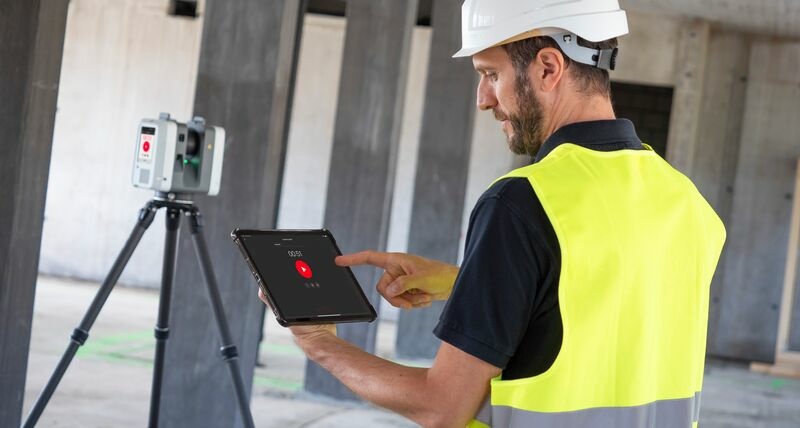
Equipment: Trimble X12 (±2mm accuracy), FARO Focus Premium, Leica RTC360 Rate: $0.20–$0.70/sqft Speed: 20,000–30,000 sqft/day with a field crew Best for: Meeting strict state mandate requirements that specify survey-grade accuracy, CAD/911 compatibility, and field-verified documentation
This is the recommended technology for school safety compliance. The resulting survey-grade point cloud is field-verified and CAD-compatible, capturing the room-by-room detail and life-safety asset locations that states like Texas require — the foundation your team uses to produce the labeled floor plans the mandate specifies. The scanning process itself constitutes the field verification walkthrough required by most mandates.
Mobile SLAM Scanning
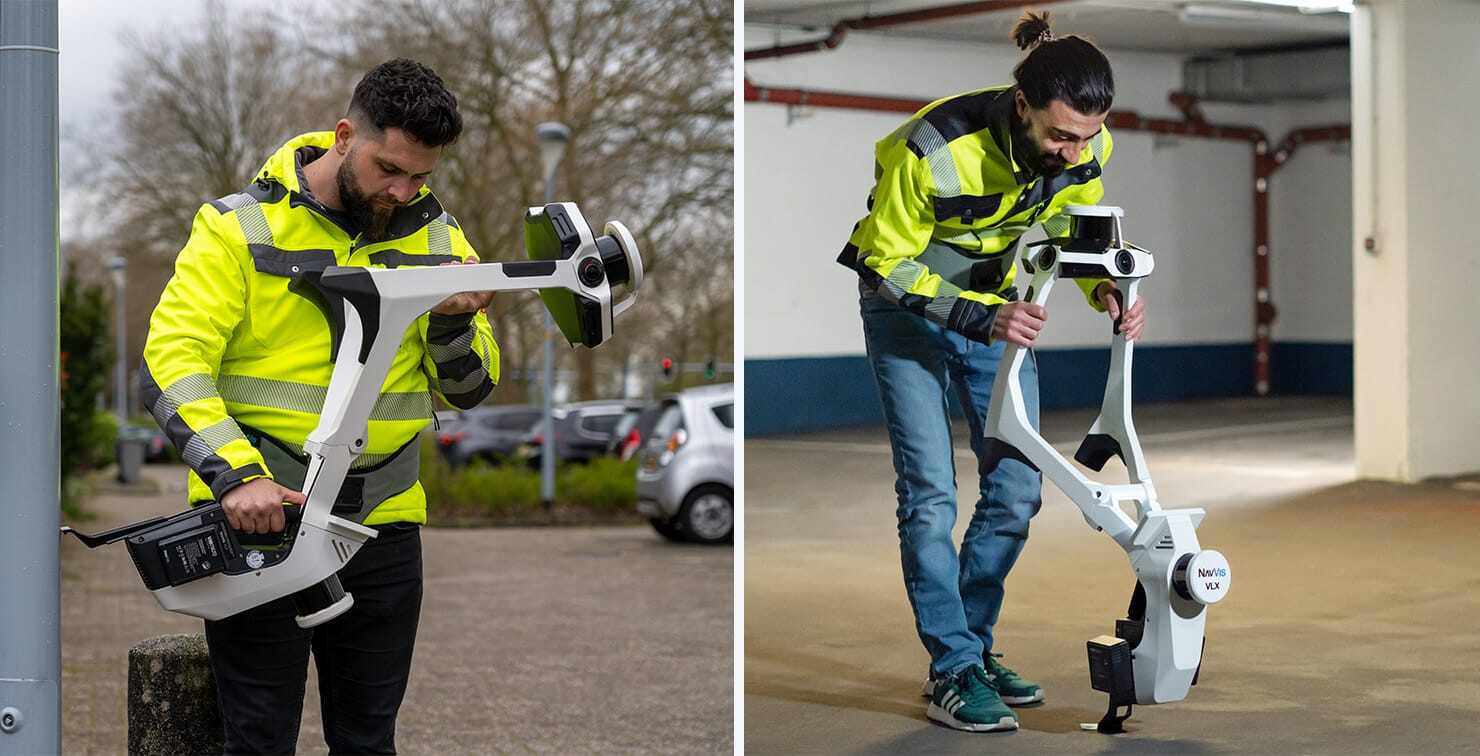
Equipment: NavVis VLX3 (±5mm accuracy, ±3mm with control points) Rate: $0.20–$0.50/sqft Speed: 200,000–300,000 sqft/day Best for: Large campuses, multi-building districts, warehouse-scale facilities
Mobile mapping covers more area per day, making it cost-effective for large districts or campuses where the slightly lower accuracy (still within most state requirements) is acceptable. The speed advantage translates to lower field costs, especially for high-volume district contracts.
Matterport Virtual Tours
Equipment: Matterport Pro3 Rate: From $1,500/building for schools Best for: Schools that also need enrollment marketing virtual tours
A Matterport tour produces an interactive, navigable 3D model of the school interior. While not survey-grade, it provides visual documentation useful for first responder familiarization. The real value is the dual-purpose capability: the same tour used for safety pre-planning also serves as an enrollment marketing tool on the school’s website.
The Dual-Purpose Value Proposition
One of the strongest arguments for school safety scanning is the dual-purpose return on investment. A single on-site visit can produce:
- Safety deliverables — Point cloud scan data, PDF measurement reports, and mapped emergency asset locations for fire/police/EMS
- Marketing deliverables — A Matterport 3D virtual tour for enrollment marketing
Schools pay for one visit and receive two completely different products serving two completely different needs. The safety documentation goes to your local first responders. The virtual tour goes on your school website for prospective families.
This dual-purpose approach is particularly compelling when presenting the investment to school boards, as it addresses both safety compliance and enrollment marketing simultaneously.
How State Grants Offset Costs
Many states provide grant funding that can partially or fully cover school safety mapping costs:
| State | Grant Amount | Coverage |
|---|---|---|
| Georgia | $61,000 per school | Covers 100% of most scanning projects |
| Texas | SAFE Grant ($800M+) | Varies by district — often covers full compliance costs |
| Minnesota | $7M statewide | Competitive — administered through regional boards |
| Indiana | $5,000 per school | Covers most elementary school scanning costs |
| Florida | $3,000–$5,000 per school | Partial coverage — offsets a significant portion |
| Nebraska | $525K–$4M | Varies by district size |
| Michigan | Up to $1M per grantee | Can cover entire district scanning programs |
Georgia’s $61,000 per school is the most generous per-school allocation, easily covering the full cost of 3D scanning plus Matterport tour for any school building. Texas’s SAFE Grant ($800M+) provides district-level funding that can cover comprehensive mapping programs across entire school systems.
For a detailed guide on applying for these grants, see our state grants funding guide.
Important: Federal grants (STOP School Violence, COPS SVPP) do not fund mapping or scanning. School safety mapping is funded exclusively at the state level.
What Schools Receive
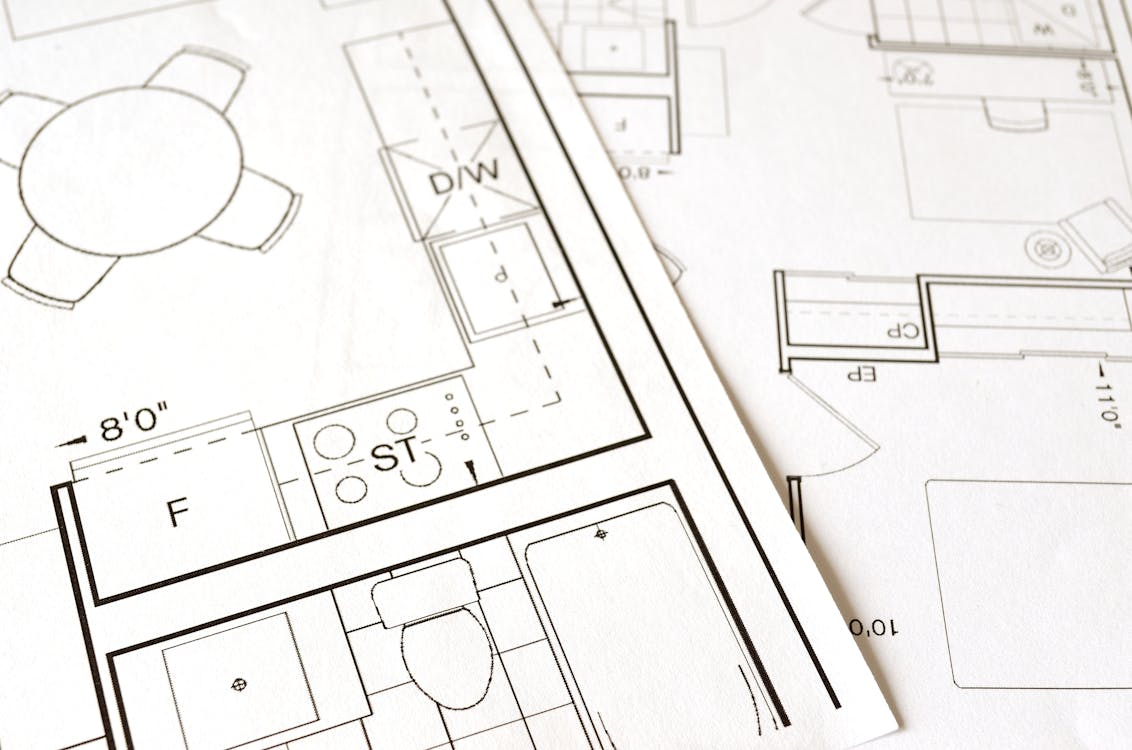
When a school invests in safety scanning, the deliverables typically include:
- Point cloud data files — E57, RCP, LAS formats, BIM/CAD-conversion-ready and importable into 911/GIS dispatch and CAD platforms
- Measurement report (PDF) — key room, corridor, and site dimensions in a shareable report
- Room measurements — precise dimensions for every room, corridor, and space, measured directly from the scan data
- Door and access point mapping — Entry/exit points, emergency exits, stairwells
- Emergency asset locations — AED, fire extinguisher, camera, and utility positions (if requested)
- Multi-format exports — Digital and printable versions for different agencies
- Matterport virtual tour (if included) — Interactive 3D walkthrough with shareable link
All scan data is delivered in BIM/CAD-conversion-ready formats compatible with the CAD/911 dispatch systems referenced by state mapping mandates.
Getting a Quote
To receive an accurate project quote, schools should be prepared to provide:
- Total square footage of each building to be scanned
- Number of buildings in the project
- Number of floors per building
- Deliverable requirements — point cloud only, processed scan data + reports, or full safety package
- State mandate — which specific legislation you’re complying with
- Timeline — when documentation must be submitted to first responders
- Additional needs — Matterport tour, aerial/exterior documentation, parking areas
Visit our quote page to request a project estimate, or use our school safety compliance checker to determine your state’s specific requirements first.
Frequently Asked Questions
How much does it cost to scan a single school building?
For a standard 50,000 sqft school building, 3D laser scanning costs $10,000–$20,000 depending on complexity, deliverables, and scanning method. Schools have relatively open layouts (large classrooms, hallways, gyms, cafeterias), so they fall toward the lower end of the per-sqft range.
Can we reduce costs by scanning multiple schools?
Yes. Multi-school district contracts lower the per-building cost by amortizing equipment mobilization and crew deployment across multiple sites. Districts planning to scan all their schools should request a district-wide quote for the best pricing.
Does insurance cover school safety scanning?
School safety scanning is typically funded through school safety budgets, state grants, or bond measures rather than insurance. However, having current documentation can strengthen insurance claims and may favorably impact premiums, as insurers view comprehensive building documentation as a risk reduction measure.
How long does scanning take per school?
A typical 50,000 sqft school takes 1–2 days to scan with survey-grade equipment. Mobile mapping (NavVis VLX3) can complete the same building in 4–6 hours. Processing and deliverable preparation takes an additional 3–5 business days after scanning.
Is Matterport scanning sufficient for state compliance?
For most state mandates, Matterport alone does not meet the technical requirements. State mandates typically require CAD-compatible floor plans, survey-grade accuracy, and formats integrable with 911 dispatch systems. Matterport is excellent as a supplementary visual documentation tool and for enrollment marketing, but laser scanning is needed for the official compliance deliverables.
What is the minimum project size?
Our minimum project size is $1,000. This covers small buildings, single-floor facilities, or limited-scope documentation projects.
Can 3D scanning be done while school is in session?
Yes. 3D laser scanning is non-invasive and does not produce noise, fumes, or disruption. Scanning can be performed during school hours, though many schools prefer weekends or breaks for minimal interference. The scanning crew moves through the building systematically, spending 5–10 minutes per room.
All pricing reflects THE FUTURE 3D’s current service rates as of 2026. Pricing may vary based on project-specific requirements. Request a quote for accurate project pricing.
Ready to Start Your Project?
Get a free quote and consultation from our 3D scanning experts.
Get Your Free Quote