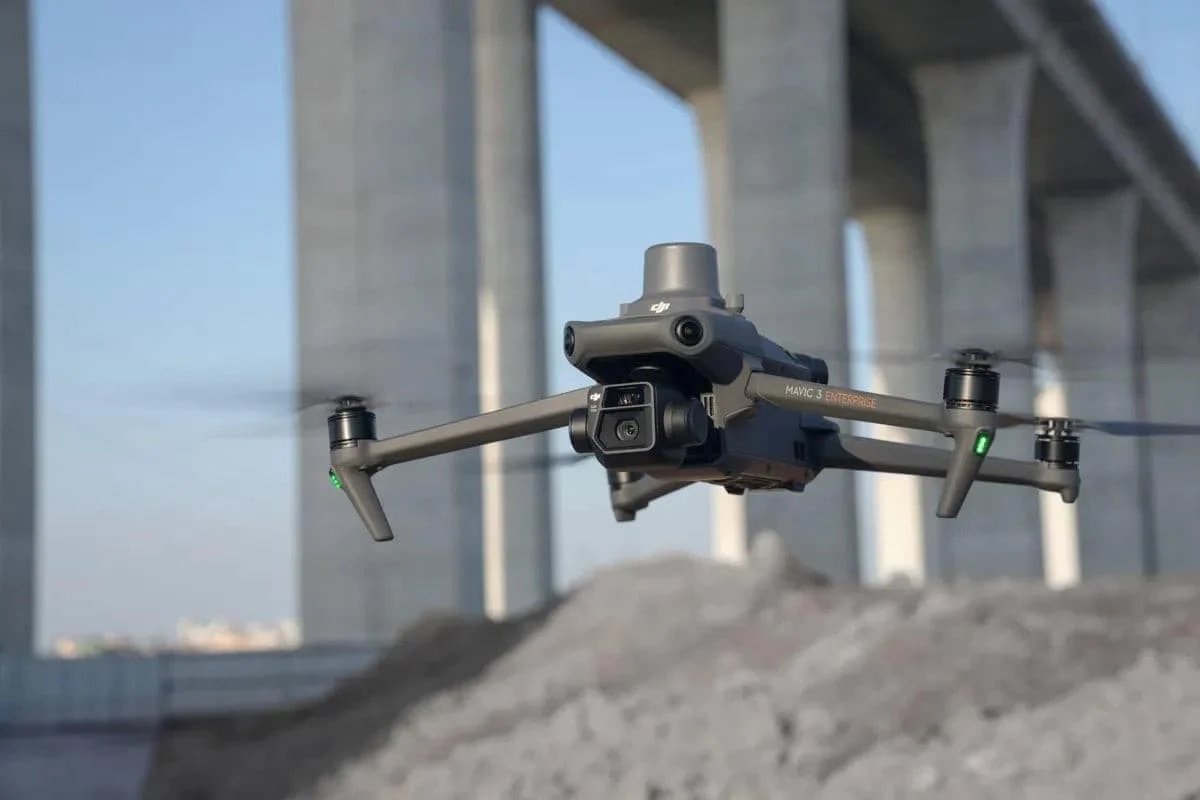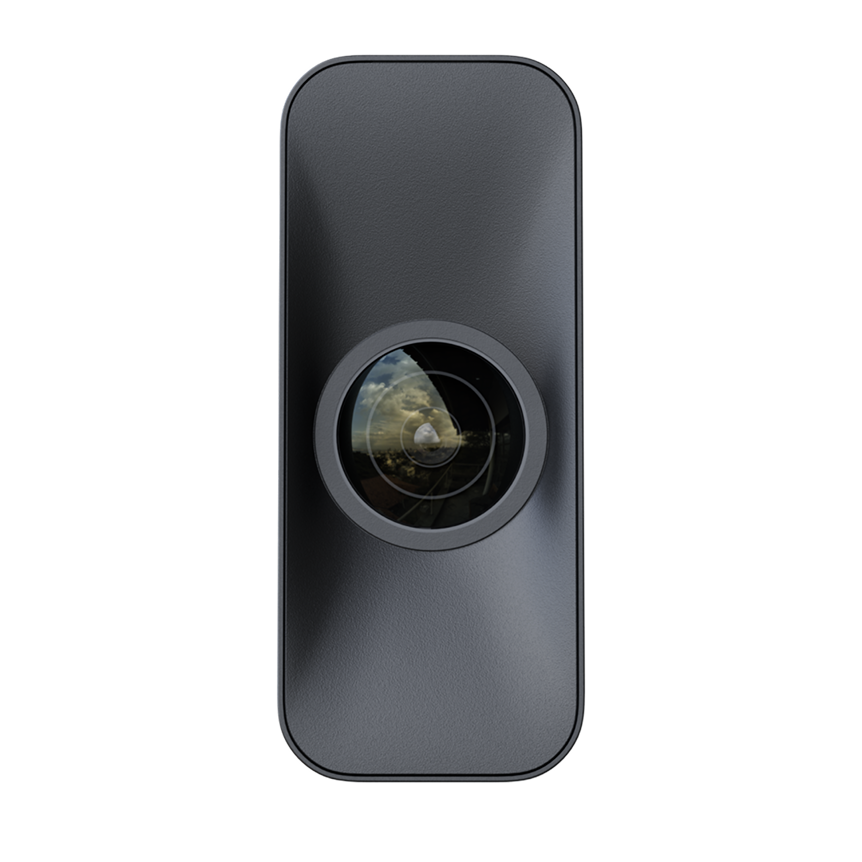
The Matterport Pro2 served the virtual tour industry well for years, establishing the standard for immersive 3D tours. When Matterport released the Pro3 with LiDAR integration, faster capture speeds, and improved image quality, the question every Pro2 owner asked was: is the upgrade worth the additional investment?
The answer depends on your scan volume, client types, and how you use the data. This comparison covers every meaningful difference to help you decide.
Hardware Specifications Head-to-Head
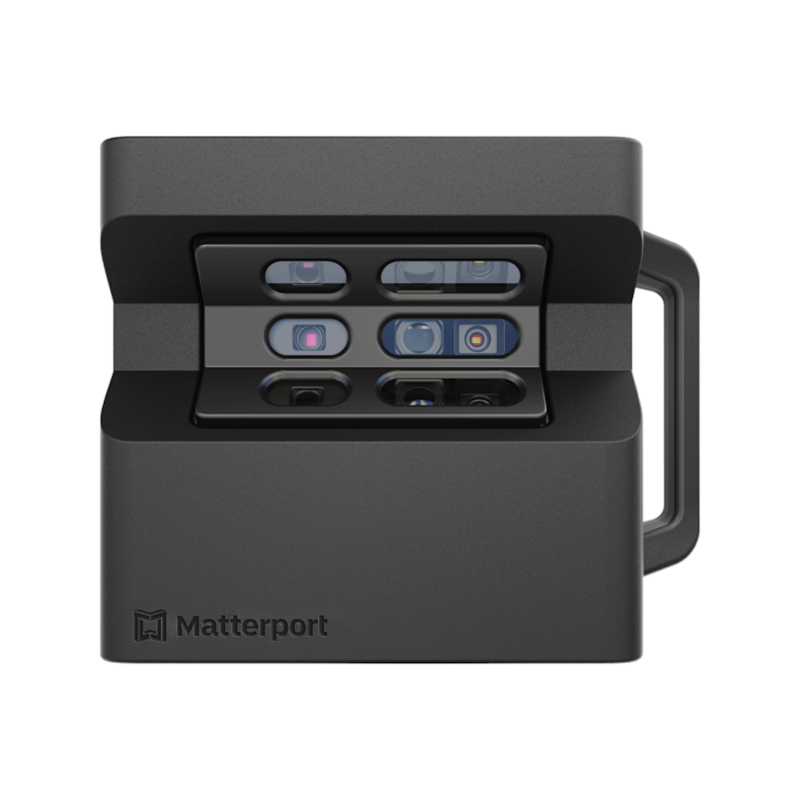
| Specification | Pro2 | Pro3 |
|---|---|---|
| Output pano resolution | 134 MP equirectangular | 134.2 MP |
| Exposures per HDR frame | 5 | 5 |
| Depth Sensor | Structured light (826.8nm) | LiDAR (904nm, Class 1) |
| Depth range | 0.5m to ~5 meters | 0.5m to 100 meters (100m only available with E57) |
| Depth accuracy | ±1% | ±20mm @ 10m |
| Capture Time per Scan | 20 seconds (Matterport’s Pro2 spec article); 24-40 seconds per sweep (Matterport’s compare page) | Under 20 seconds |
| Field of view | 360° H / 258.4° V | 360° H / 295° V |
| Outdoor Capability | No (structured light fails in sunlight) | Yes (LiDAR works in any lighting) |
| Weight | 3.5 kg (Matterport’s Pro2 spec article); 3.4 kg (compare page) | 2.2 kg |
| Ingress protection | Not rated | IP43 |
| Low-Light Performance | Acceptable | Improved HDR |
| Point Cloud Quality | Noisier IR depth | Cleaner LiDAR depth |
| Capture App | Matterport Capture (iOS/Android) | Matterport Capture (iOS/Android) |
| Cloud Platform | Matterport Cloud | Matterport Cloud |
The Five Biggest Differences
1. LiDAR vs Infrared Depth Sensing
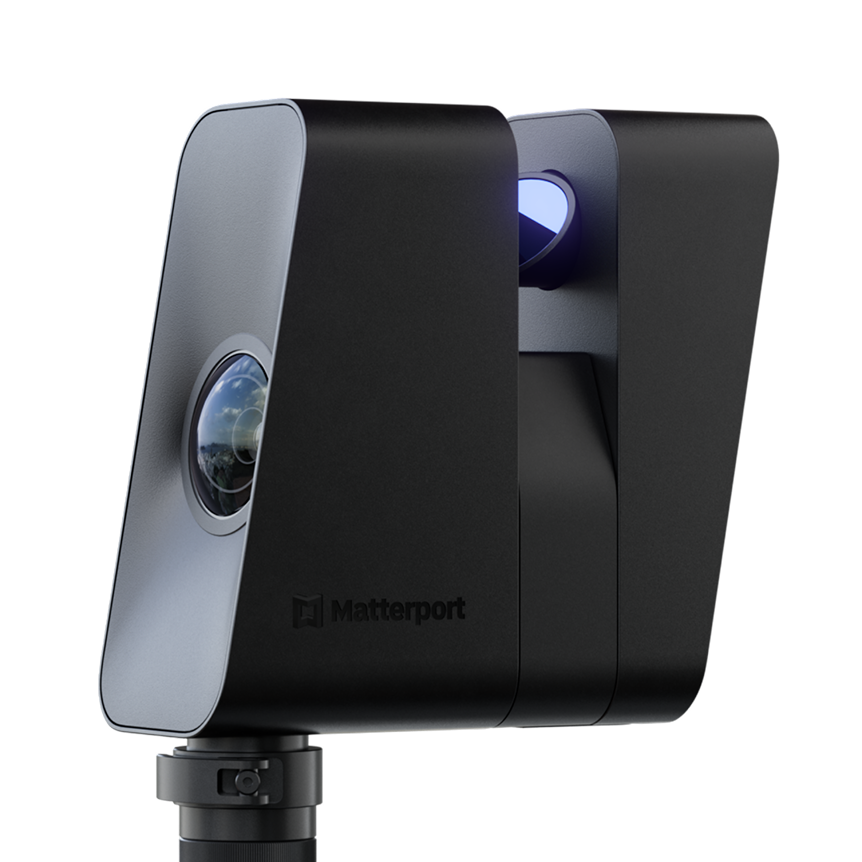
This is the single most important upgrade. The Pro2 uses structured infrared light to measure depth — projecting an IR pattern and reading how it deforms across surfaces. This works well indoors in controlled lighting but has fundamental limitations:
- Fails in sunlight. Any room with significant natural light from windows reduces IR depth accuracy. Outdoor scanning is impossible.
- Shorter range. Matterport rates the Pro2’s depth range at roughly 5 meters, limiting it to standard room-sized spaces.
- Noisier depth data. The IR method produces more noise in the 3D mesh, resulting in bumpier surfaces and less precise measurements.
The Pro3’s LiDAR (laser-based depth sensing) solves all three problems:
- Works in any lighting. Sunlight, mixed lighting, low light — LiDAR performs consistently regardless of ambient conditions.
- 100-meter range. Matterport rates the Pro3’s depth range up to 100 metres, available with the E57 output, so large open spaces like warehouses, atriums, lobbies, and outdoor areas are capturable.
- Cleaner depth data. LiDAR produces less noisy 3D meshes, resulting in smoother surfaces and more accurate measurement tools.
Bottom line: If you ever scan spaces with windows, outdoor areas, or rooms larger than about 5 meters in any dimension, the Pro3’s LiDAR is a transformative upgrade.
2. Capture Speed
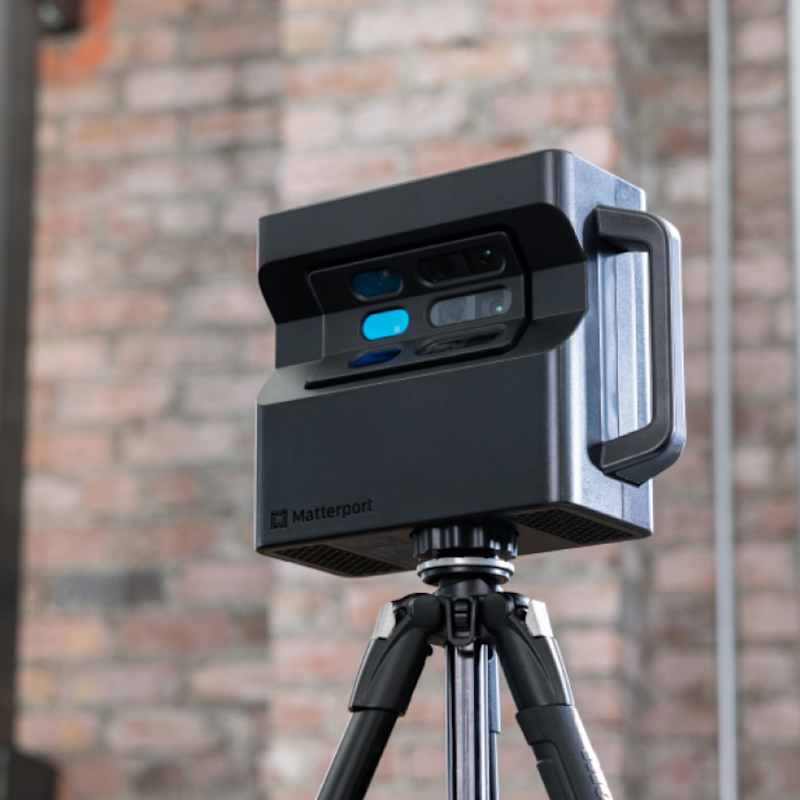
Per-scan capture time is closer than the marketing suggests. Matterport specifies under 20 seconds per scan for the Pro3, and 20 seconds per scan for the Pro2 in its Pro2 spec article — though Matterport’s own compare page gives the Pro2 a slower 24-40 seconds per sweep. We do not publish job-duration tables for either camera: real job time is dominated by the number of scan positions, the walking distance between them, and setup, not by the per-scan figure.
Where the Pro3 genuinely shortens a job is coverage per position. Its 100-metre depth range against the Pro2’s five metres means fewer positions in large or open spaces, and no failed positions where sunlight defeats structured light.
3. Image Quality
This is a more nuanced comparison than the spec sheet suggests:
Pro3 advantages:
- Better dynamic range handling (bright windows alongside dark corners)
- More consistent color reproduction across varied lighting conditions
- Better low-light performance
Pro2 counterpoint:
- Both cameras output a 134 MP equirectangular panorama, so the Pro3’s advantage is in dynamic range and depth data rather than in raw pixel count
- Some professionals feel the Pro2’s image character has a more “photographic” quality for certain applications
- For purely marketing-focused tours where visual warmth matters, the Pro2 still has fans
In practice, the Pro3’s HDR and depth improvements outweigh the Pro2’s subjective image character for most professional applications. The difference is most visible in challenging lighting conditions where the Pro3’s HDR handles mixed exposure far better.
4. Outdoor and Mixed-Environment Capability

The Pro2 is strictly an indoor camera. The moment sunlight hits the structured IR pattern, depth data becomes unreliable or fails completely. This means:
- Cannot scan outdoor patios, courtyards, or pool decks
- Transitions between indoor and outdoor spaces (covered porches, sunrooms) are problematic
- Properties with floor-to-ceiling windows on sunny days can produce artifacts
The Pro3 handles all of these scenarios because LiDAR operates independently of ambient lighting. This opens up use cases that the Pro2 simply cannot address:
- Hotel properties with outdoor amenities
- Real estate listings with significant outdoor living areas
- Commercial properties with atriums and lobbies with glass walls
- Construction sites (naturally outdoor/mixed environments)
5. Measurement Accuracy
Both cameras support Matterport’s measurement tools (on Professional plan and above), but the quality of measurements differs:
- Pro2: Matterport publishes a depth accuracy of ±1%, so error grows with distance and degrades in larger spaces where the structured-light data becomes noisier.
- Pro3: Matterport publishes a fixed ±20mm at 10m, which holds up more consistently across large spaces than a percentage figure does.
For applications where measurements are used for general reference (real estate square footage estimates, furniture placement), both cameras are adequate. For applications requiring more precise spatial data, the Pro3’s LiDAR advantage becomes meaningful.
Note: Neither Matterport camera provides survey-grade accuracy. For projects requiring ±2mm precision, professional 3D laser scanning with equipment like the Trimble X12 is the appropriate solution.
Cost of Upgrade
Direct Camera Cost Comparison
The Pro2 is available at a lower price point, while the Pro3 represents a significant investment. Both cameras require a separate Matterport Cloud subscription ($9.99 to $309/month depending on plan).
Break-Even Calculation
The honest case for the Pro3 is not a per-scan stopwatch saving — Matterport’s own figures put the two cameras within seconds of each other per scan. It is jobs won and jobs completed:
- Jobs the Pro2 cannot take at all. Anything with significant sunlight, outdoor areas, or indoor-outdoor transitions. Structured light fails there; LiDAR does not.
- Fewer scan positions in large spaces. A 100-metre depth range against five metres means far fewer setups in warehouses, atriums and lobbies — that is where real hours disappear.
- Fewer re-shoots. Failed depth data on a bright-window position means a return visit, and one return visit costs more than any per-scan difference.
Work out your own break-even from the jobs you actually turn away today, not from a generic time-saved table.
Who Should Upgrade
Upgrade Now If:
- You scan 20+ properties per year
- You handle commercial, hospitality, or AEC clients
- You frequently encounter outdoor or mixed indoor/outdoor spaces
- Speed is a competitive factor (fitting more scans per day)
- You need cleaner depth data for measurement applications
Stay with Pro2 If:
- You scan fewer than 15 properties per year
- All your scans are indoor residential with controlled lighting
- Your clients are satisfied with current quality
- Budget constraints are a genuine limitation
- You are planning to exit the virtual tour market
Skip Both If:
- You are just testing the market. Start with smartphone capture on Matterport’s free plan, or consider a Ricoh Theta Z1 with Matterport as a lower-cost entry point.
What About Buying a Used Pro2?
Used Pro2 cameras are available at significantly lower prices than new Pro3 units. This can make sense if:
- You are starting a virtual tour business on a tight budget
- Your target market is exclusively indoor residential
- You plan to upgrade to Pro3 within 12-18 months once you validate demand
- You understand the limitations (no outdoor capture, five-metre depth range, no removable battery)
However, consider that the Pro2 is an aging platform. Future Matterport development will prioritize Pro3 capabilities, and the value of used Pro2 cameras will continue to decline.
Pro3 Limitations to Know
The Pro3 is not perfect. Be aware of these limitations:
- Removable battery, and a lighter body. At 2.2 kg the Pro3 is actually lighter than the 3.5 kg Pro2, and its battery is user-removable where the Pro2’s packs are permanently installed — plan spares accordingly.
- Larger file sizes. LiDAR depth data and High Density scanning mean more data per scan. Budget for faster internet and more cloud storage.
- Not survey-grade. Despite LiDAR, the Pro3 is designed for virtual tours and general measurement, not engineering-grade accuracy.
- Platform lock-in persists. The same Matterport Cloud dependency applies. Your tours are hosted on their servers regardless of which camera you use.
How THE FUTURE 3D Uses Both Cameras
At THE FUTURE 3D, we operate Matterport Pro3 cameras as our primary virtual tour scanning equipment. The LiDAR capability, the 100-metre depth range and the HDR image quality align with our professional service standards.
For our clients, the camera choice is transparent — you get the best available technology without needing to make the investment yourself. Whether your project is a residential listing, a hotel property with outdoor amenities, or a commercial space with challenging lighting conditions, the Pro3 handles it all.
For projects requiring accuracy beyond what Matterport can deliver, we use professional 3D laser scanners like the Trimble X12 (3D point accuracy 2.2 mm @ 20 m) — an entirely different class of equipment designed for engineering and construction documentation.
Key Takeaways
-
The Pro3 is a substantial upgrade over the Pro2 — LiDAR depth, a 100-metre range, better HDR handling and outdoor capability address every major Pro2 limitation.
-
LiDAR is the game-changer. It solves the Pro2’s sunlight problem, extends the depth range from about five metres to 100, and produces cleaner 3D mesh data.
-
The upgrade pays for itself through jobs, not stopwatches — outdoor and mixed-environment work the Pro2 cannot take, and far fewer setups in large open spaces.
-
The Pro2 still works for indoor-only residential scanning at low volume, but it is an aging platform with declining resale value.
-
Neither camera is survey-grade. For engineering accuracy, you need professional laser scanning equipment.
-
Hiring a professional gives you Pro3 quality without the capital investment, subscription management, or learning curve.
Want Pro3 quality without buying the camera? Get a quote from THE FUTURE 3D for professional Matterport scanning, or check our detailed comparison page for additional specifications.
Ready to Start Your Project?
Get a free quote and consultation from our 3D scanning experts.
Get Your Free Quote