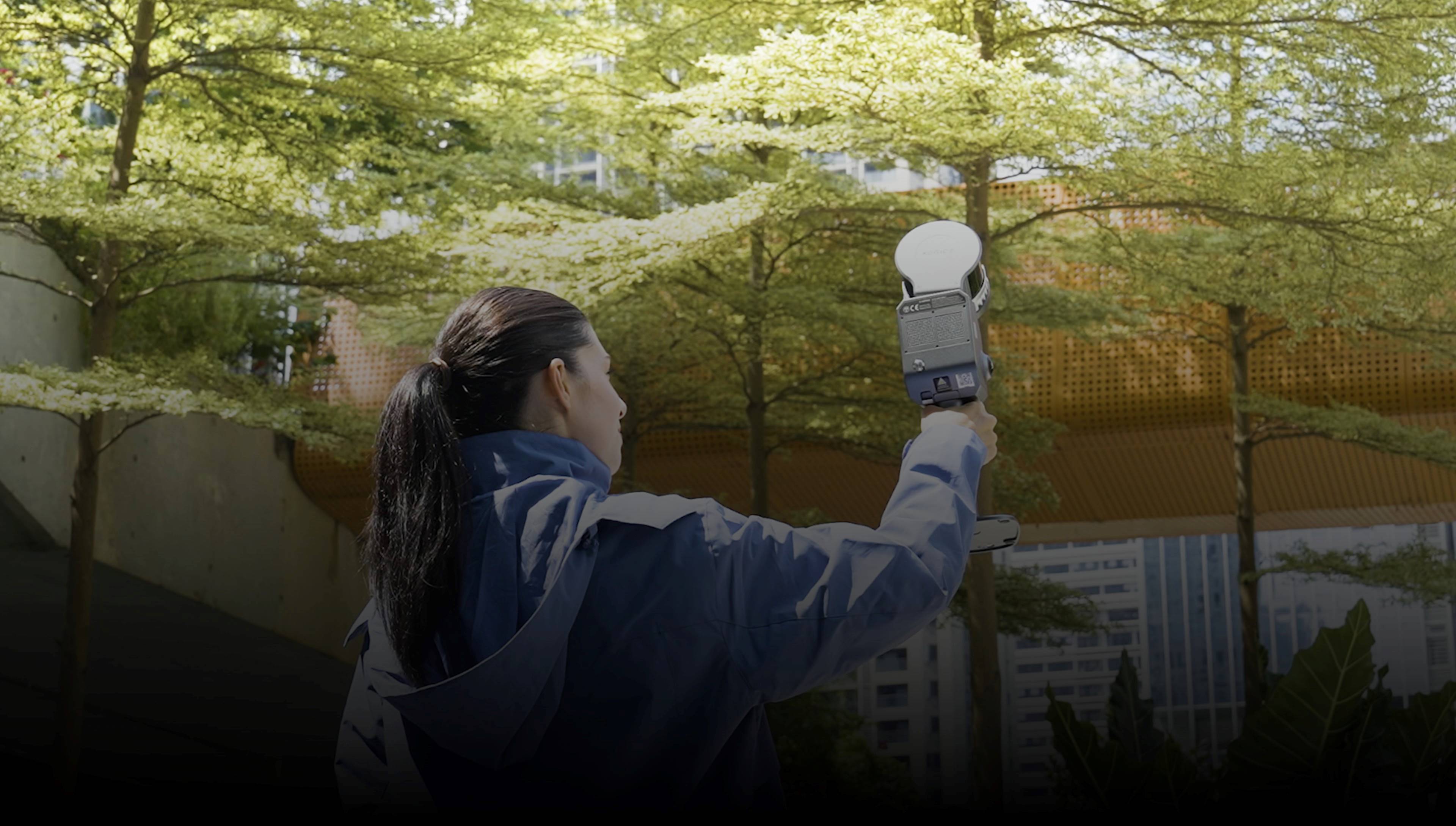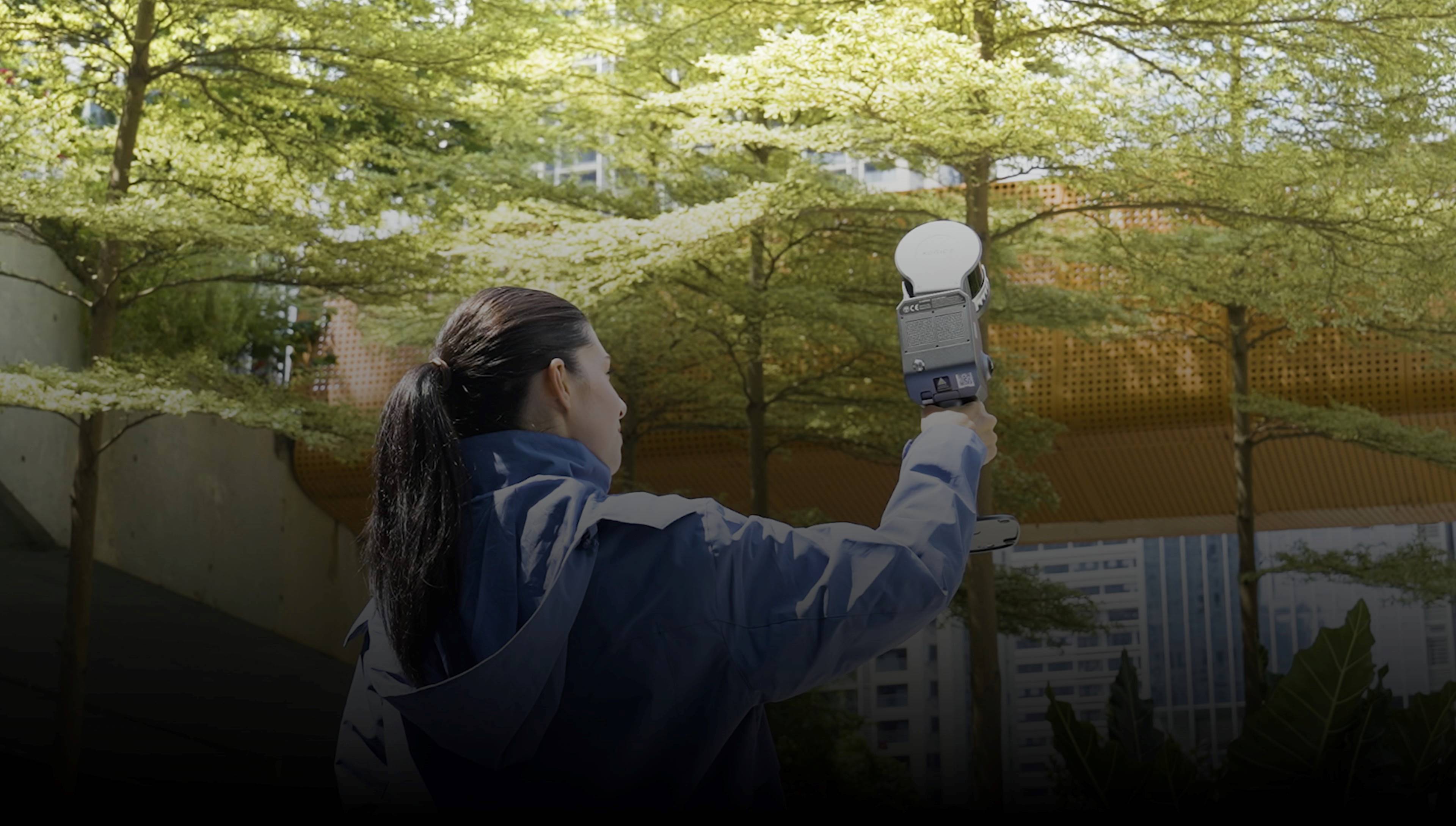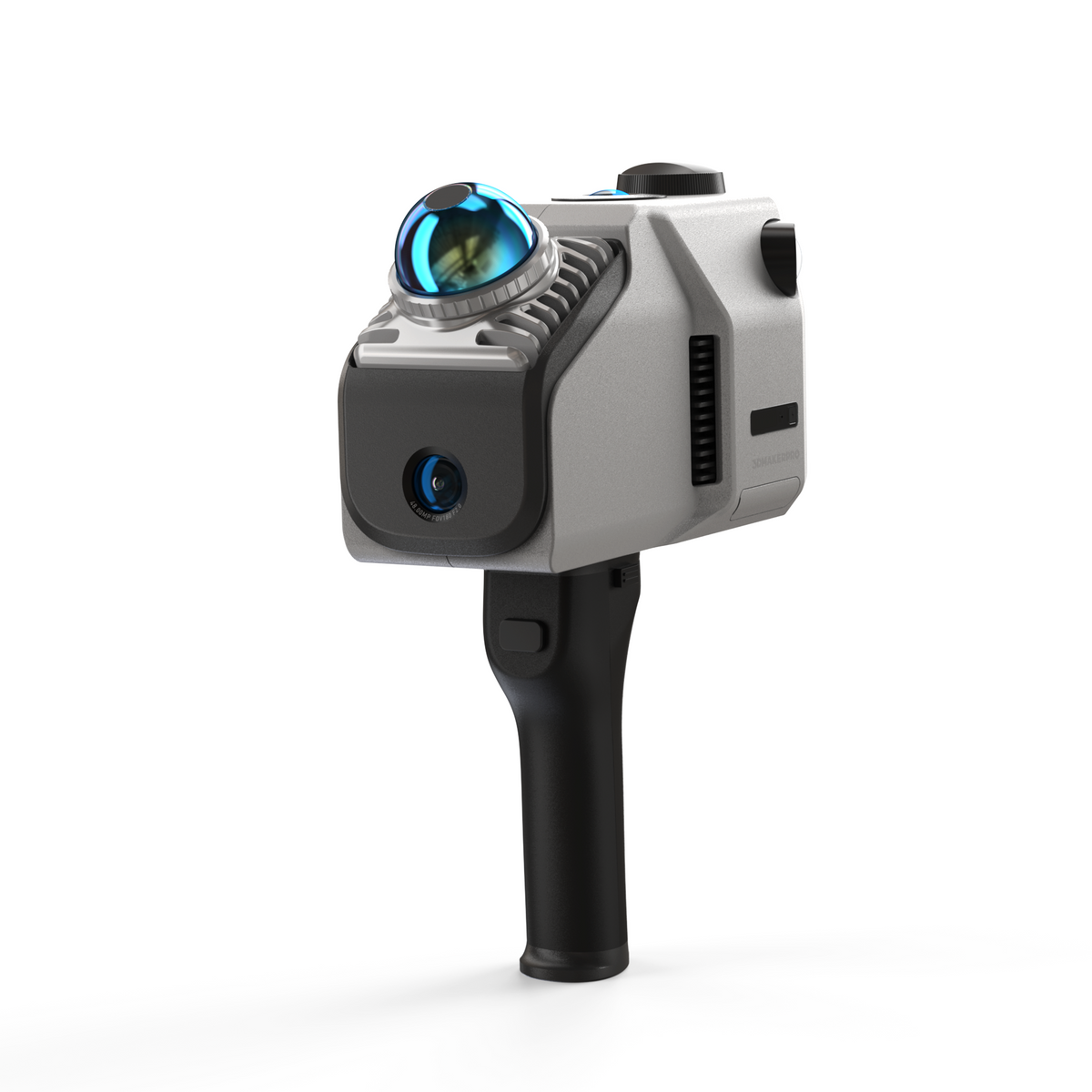
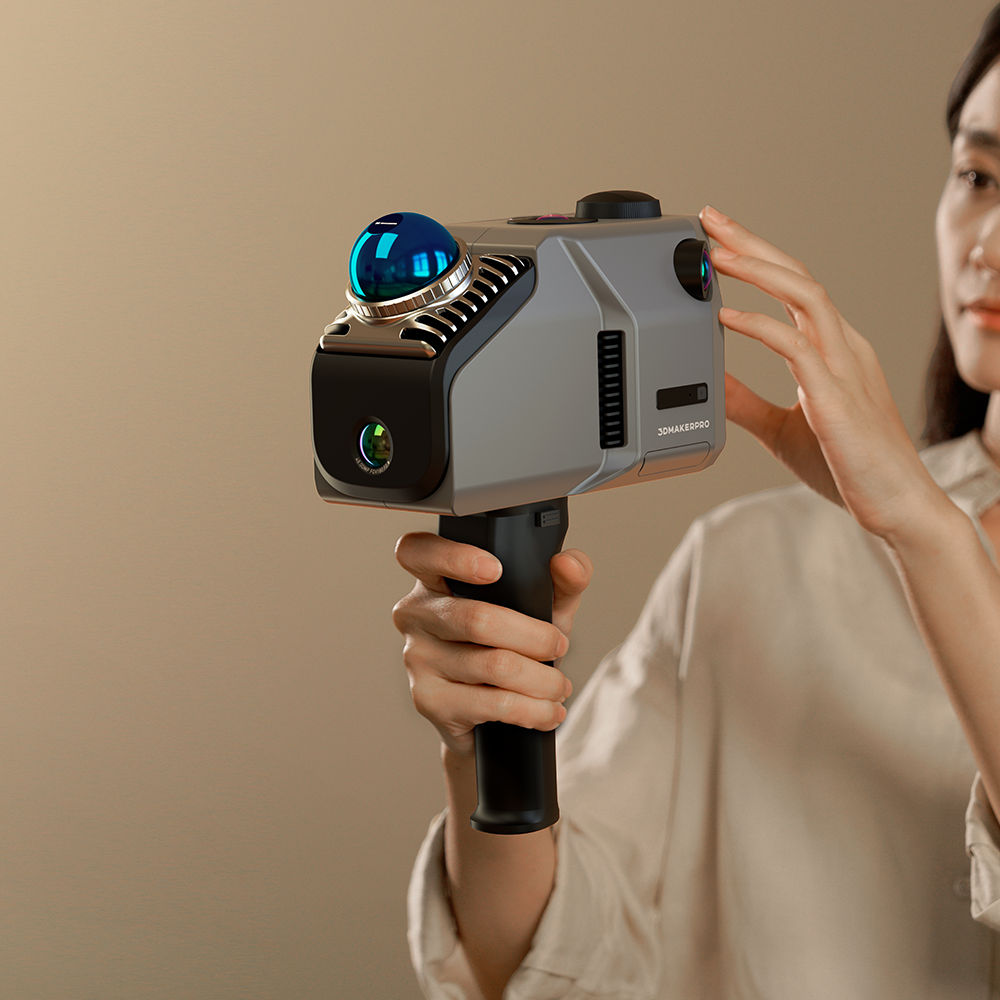
The 3DMakerPro Eagle is a consumer/prosumer handheld LiDAR scanner that brings building-scale 3D scanning to an approximately $4,000 price point. It targets architects, contractors, and content creators who want to capture rooms and small building environments without investing in professional scanning equipment. This review covers the Eagle’s capabilities, limitations, and where it fits relative to professional alternatives.
Standard vs Max: What’s the Difference?
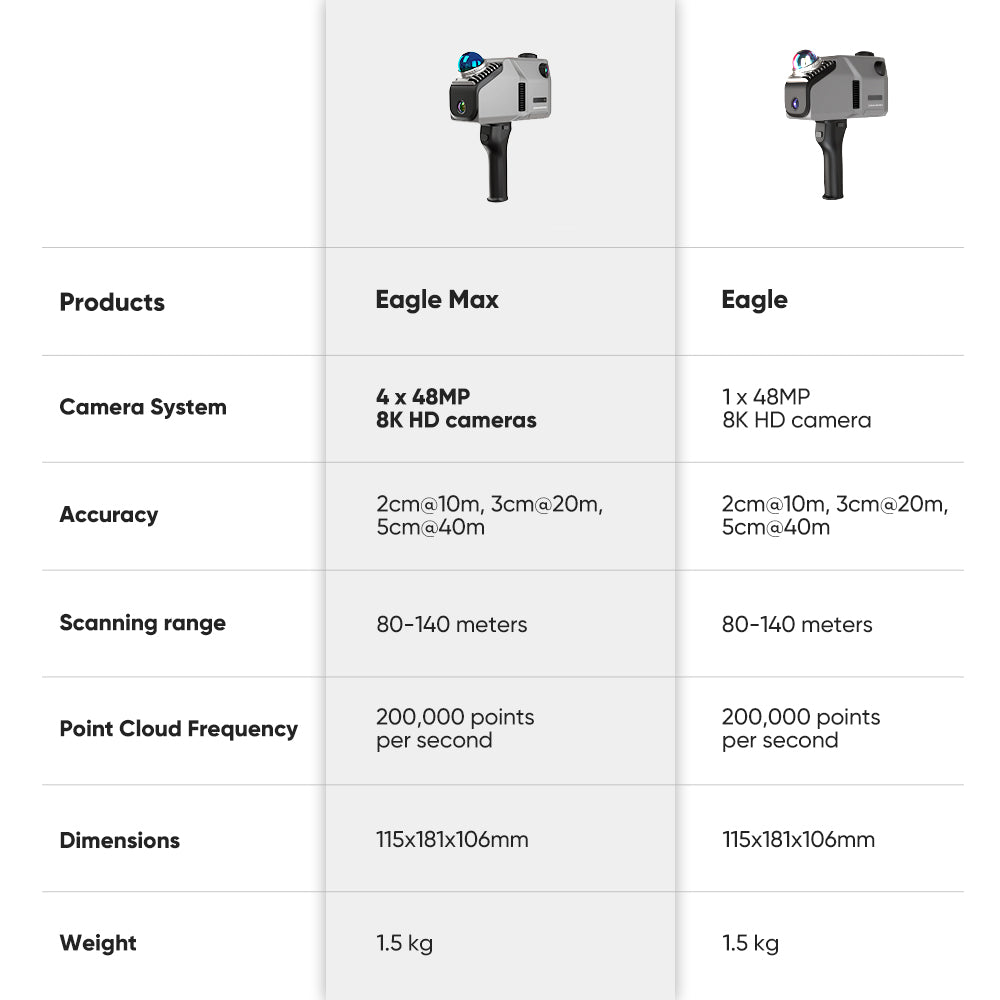
The Eagle comes in two editions that share identical LiDAR hardware but differ in camera capability:
| Specification | Eagle Standard | Eagle Max |
|---|---|---|
| Cameras | 1 × 48MP fisheye | 4 × 48MP fisheye |
| Panoramic Quality | Basic color capture | 8K HDR panoramic imaging |
| LiDAR Scan Speed | 200,000 points/second | 200,000 points/second |
| Accuracy | 2cm @ 10m | 2cm @ 10m |
| Range | 80–140m | 80–140m |
| FOV | 360° H × 59° V | 360° H × 59° V |
| Weight | 1.5 kg | 1.5 kg |
| Screen | 3.5-inch live preview | 3.5-inch live preview |
| Price | ~$4,000 | ~$4,000+ |
The Max edition’s four cameras provide significantly better color textures and enable true 8K HDR panoramic tours. If your use case relies on visual quality — real estate marketing, virtual walkthroughs, content creation — the Max is worth the premium. For pure point cloud capture where color is secondary, the Standard edition delivers identical geometric results.
What the Eagle Does Well
Accessibility. At approximately $4,000, the Eagle is an order of magnitude cheaper than professional alternatives like the Xgrids L2 Pro or NavVis VLX 3. It genuinely democratizes spatial scanning.
Portability. At 1.5 kg with no tripod required, the Eagle is grab-and-go. No setup, no calibration, no training prerequisites. Turn it on and start scanning.
Gaussian Splatting output. The Eagle’s proprietary software supports native GS reconstruction alongside point cloud output. This produces photorealistic, real-time renderable 3D scenes from the same capture data — a feature typically reserved for much more expensive equipment.
8K panoramic tours (Max). The Max edition’s four cameras produce immersive panoramic tours with HDR lighting. Combined with GS output, this creates compelling visual documentation of building environments.
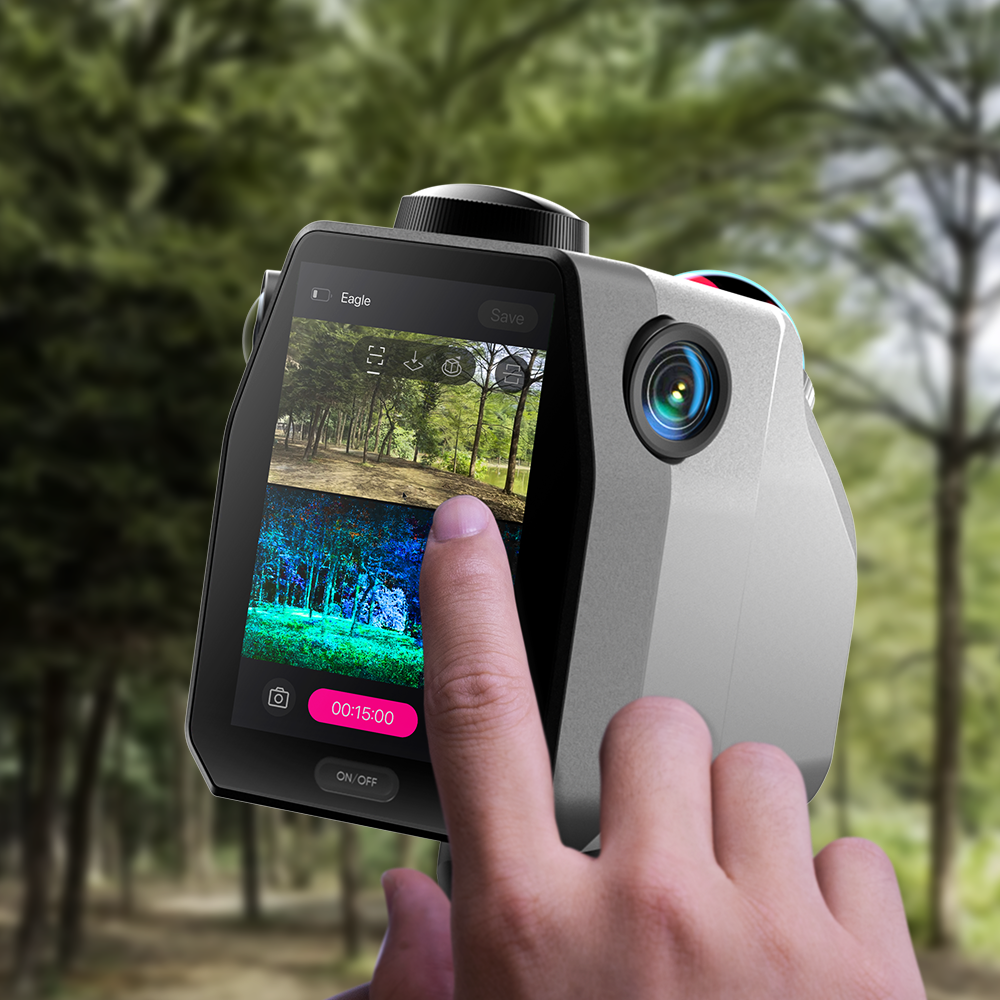
Live preview screen. The 3.5-inch display shows point cloud, photo, or split-screen views in real time during capture. This eliminates the guesswork of blind scanning and helps operators identify coverage gaps immediately.
Where the Eagle Falls Short
Accuracy limitations. The Eagle’s 2cm accuracy at 10m degrades to 3cm at 20m and 5cm at 40m. Independent reviews have noted floor parallelism drift up to 10–20cm in multi-story scans. This is insufficient for engineering measurement, regulatory compliance, or any application requiring sub-centimeter precision.
No drone capability. The Eagle is ground-level only. It cannot capture building rooftops, aerial site context, or large-area mapping that requires drone photogrammetry.
Software ecosystem. The Eagle’s software (with AI denoising and SLAM correction) is competent but closed. It lacks the integrations that professional tools offer — no direct Revit plugin, no standardized E57 export, and limited compatibility with industry CAD/BIM workflows.
Fan noise. Independent reviews consistently note the Eagle’s internal fan produces noticeable noise during operation.
Environment Scanning, Not Object Scanning
The Eagle is designed for building environments — rooms, halls, facades, stairwells, small outdoor areas. Its 80–140m range and 360° field of view are optimized for space-scale capture.
THE FUTURE 3D does not scan individual objects, products, or props. Our professional services focus exclusively on buildings, environments, and locations. For room-scale environment capture where the Eagle’s accuracy is sufficient, it is a legitimate consumer-grade tool.
Eagle vs Professional Alternatives
The Eagle competes in the consumer tier but often gets compared to professional scanners. Here’s how they differ:
| Feature | Eagle (~$4K) | Xgrids L2 Pro | Trimble X12 |
|---|---|---|---|
| Accuracy | 2cm @ 10m | ±1–2cm | ±2mm |
| Point Rate | 200K/sec | 320–640K/sec | 2.2M/sec |
| Range | 80–140m | 120–300m | 130m |
| GS Output | Yes | Yes (+ Revit plugin) | No |
| BIM Integration | Limited | Revit via LCC | Full (RealWorks, Revit, AutoCAD) |
| Weatherproofing | None | IP54 | IP54 |
See the full comparison at Consumer Scanners vs Professional.
Eagle vs Phone Apps
The Eagle also competes with smartphone-based scanning apps:
| Feature | Eagle | Polycam (iPhone LiDAR) | Luma AI |
|---|---|---|---|
| Hardware | Dedicated scanner | Smartphone | Smartphone |
| Range | 80–140m | ~5m (LiDAR) | N/A (video) |
| Accuracy | 2cm @ 10m | 1–2cm (close range) | Visual only |
| Point Cloud | Yes (PLY, OBJ) | Yes (PLY, GLTF) | No |
| GS Output | Yes | Yes | Yes |
| Price | ~$4,000 | Free / $150/yr | Free |
For room-scale captures (under ~50 sqft), Polycam on an iPhone with LiDAR produces comparable results at a fraction of the cost. The Eagle’s advantage emerges at building scale (1,000+ sqft) where its dedicated LiDAR sensor and 80–140m range significantly outperform smartphone capabilities. For more on mobile GS apps, see Polycam vs Luma AI.
When to Upgrade to Professional Scanning
The Eagle is appropriate for:
- Pre-design documentation where 2cm accuracy is acceptable
- Real estate marketing and virtual tour content
- Personal and hobbyist 3D capture projects
- Testing whether 3D scanning fits your workflow before investing in professional equipment
You should upgrade to professional scanning when:
- Accuracy below 1cm is required — engineering measurement, survey control, as-built documentation
- Aerial capture is needed — building rooftops, large sites, construction monitoring
- Large facilities — anything above ~10,000 sqft where professional speed matters
- Client deliverables — commercial projects requiring georeferenced, documented output
- Combined datasets — point cloud + mesh + GS from a single professional site visit
THE FUTURE 3D offers professional Gaussian Splatting services starting at $2,250, combining survey-grade LiDAR accuracy with photorealistic GS visualization. Get a quote →
Frequently Asked Questions
Is the Eagle good for construction documentation? For rough progress documentation and visual records, yes. For engineering-grade as-built documentation, regulatory submissions, or BIM-conversion workflows, no — the 2cm accuracy and drift issues make it unsuitable for tolerance-critical work.
Can the Eagle replace a Matterport? For some use cases, yes. The Eagle’s GS output and 8K panoramic tours (Max) compete with Matterport’s virtual tour capability. However, the Eagle lacks Matterport’s established cloud hosting, Mattertag annotations, floor plan generation, and real estate platform integrations. See GS vs Matterport for details.
What software does the Eagle use? The Eagle uses 3DMakerPro’s proprietary software with AI denoising, SLAM correction, and Gaussian Splatting reconstruction. It outputs PLY (point cloud), OBJ (colored mesh), and panoramic tours. The software is not JMStudio (which is used for 3DMakerPro’s smaller object scanners like the Moose).
Does the Eagle work outdoors? Yes, within its 80–140m range. The Eagle’s LiDAR works in various lighting conditions. However, it has no IP rating for weather protection, so avoid rain and heavy moisture.
Should I buy the Standard or Max edition? If visual quality matters for your use case (real estate, content creation, virtual tours), the Max edition’s 4× camera array and 8K HDR are worth the premium. If you primarily need point cloud data and GS geometry, the Standard delivers identical LiDAR performance at a lower price.
Does THE FUTURE 3D scan individual objects? No. THE FUTURE 3D focuses exclusively on buildings, environments, locations, and sites. We do not scan individual objects, products, props, or vehicles. For object-scale scanning, consumer tools like the Eagle or Polycam are suitable alternatives.
Ready to Start Your Project?
Get a free quote and consultation from our 3D scanning experts.
Get Your Free Quote