Virtual vs In-Person Campus Tours for Schools
Schools often ask whether virtual tours replace in-person visits. The answer is no — but together, they create a more effective enrollment funnel than either alone.
In-Person Tours: Strengths and Limitations
Strengths
- Sensory experience — Feel the atmosphere, hear the sounds, see the energy
- Personal interaction — Meet teachers, staff, and current students face-to-face
- Questions in real-time — Get immediate answers from knowledgeable guides
- Emotional connection — Walking through a school creates a stronger gut feeling
Limitations
- Scheduling constraints — Limited dates, times, and capacity
- Geographic barriers — Families must travel to campus
- Weather and accessibility — Rain, snow, or mobility issues can limit the experience
- Time investment — 1-2 hours plus travel time per school visit
- Scalability — Staff can only guide a limited number of tours per week
Virtual Tours: Strengths and Limitations
Strengths
- 24/7 availability — Families explore on their own schedule
- No travel required — Accessible from anywhere with internet
- Repeat visits — Families can return multiple times to compare details
- Broader reach — Military families, international prospects, working parents
- Measurable — Track who visits and which spaces they explore
- No staff time per visit — Self-guided, so an extra visitor costs no additional employee hours
Limitations
- No personal interaction (unless combined with live event)
- Limited sensory experience — Cannot feel the atmosphere the same way
- Requires internet access — Digital divide consideration
The Best Approach: Use Both
The most effective schools use virtual and in-person tours as complementary stages in the enrollment funnel:
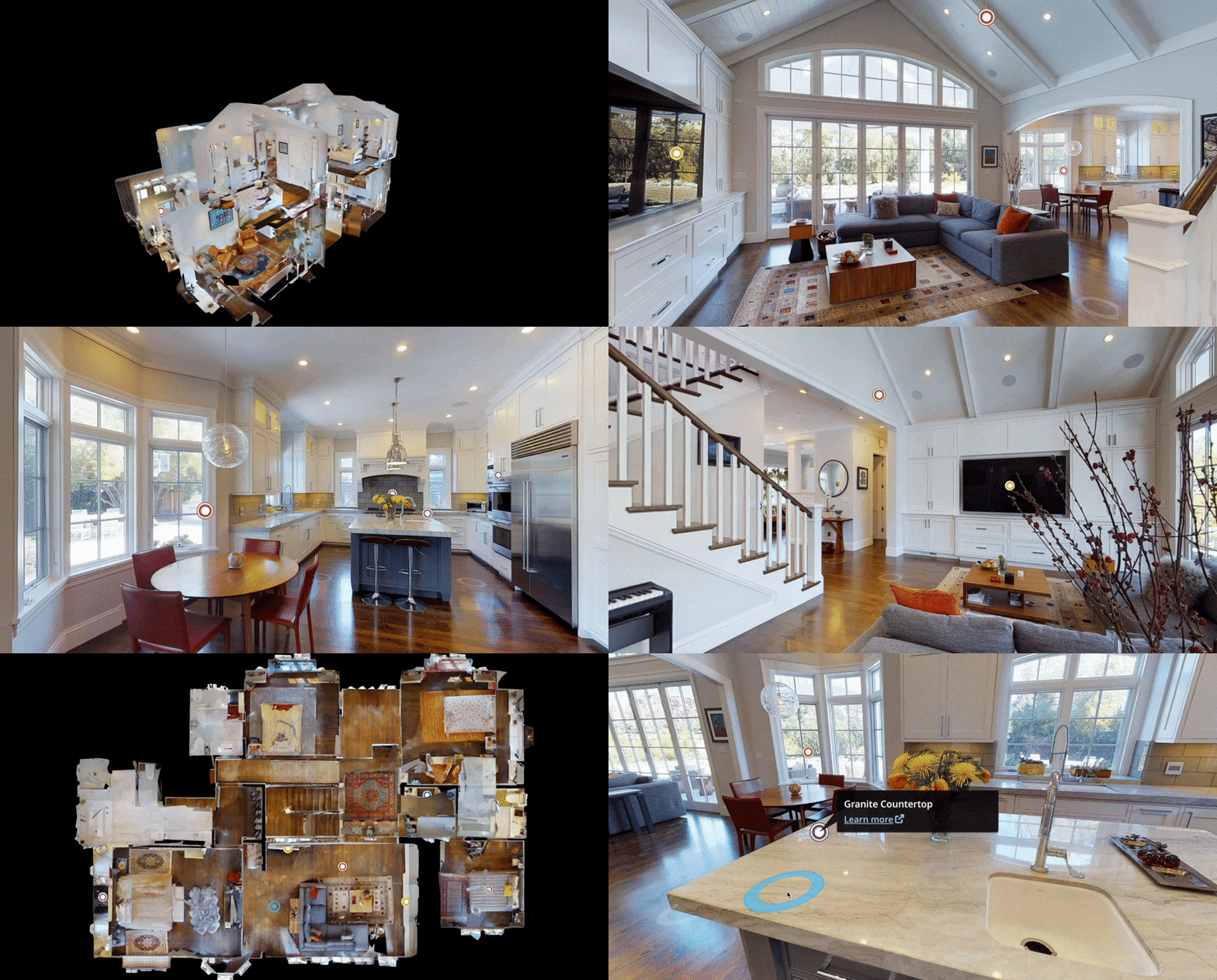
Stage 1: Virtual Exploration — Families browse your 3D tour from home, narrowing their school list from 5-8 options to 2-3 favorites.
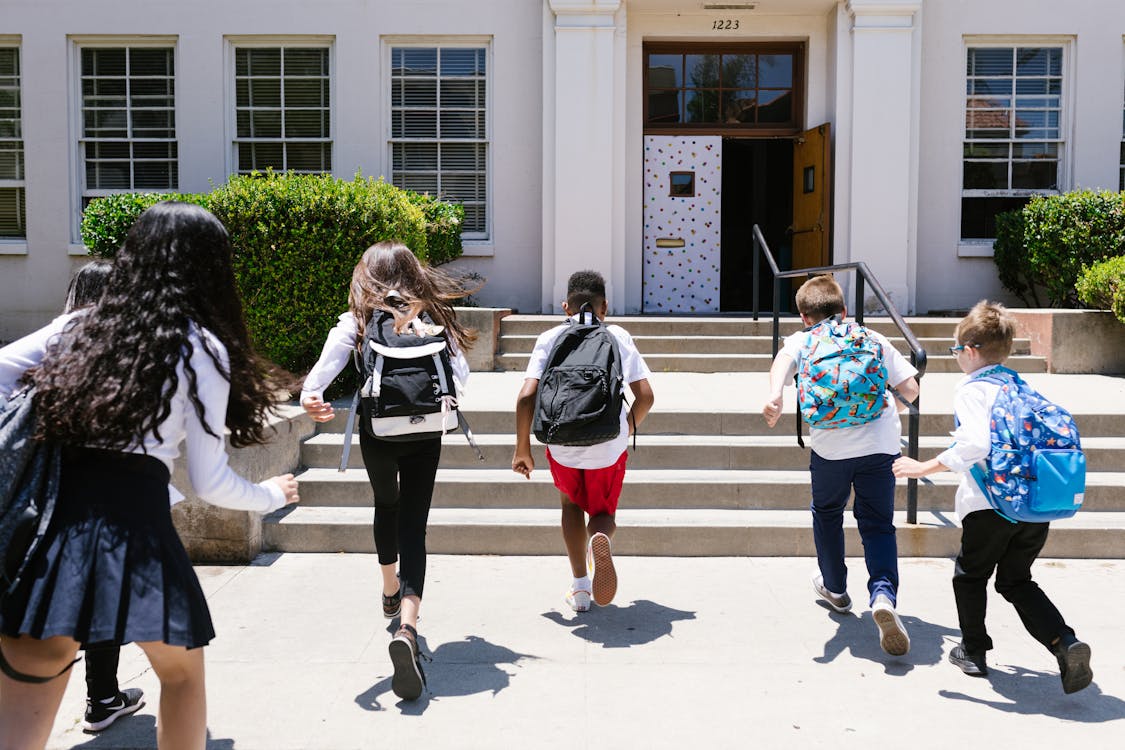
Stage 2: In-Person Visit — Families visit their top choices in person, arriving with informed questions and higher intent.
This two-stage approach benefits everyone:
- Families save time by visiting only their top choices
- Schools host fewer but more qualified visitors
- Staff spend less time on casual tire-kickers and more on serious prospects
Data: How the Two-Stage Approach Performs
Schools that implement both virtual and in-person tours typically report:
- Higher in-person tour conversion rates — Visitors who explored virtually first are more likely to enroll
- Fewer total in-person tours needed — Virtual tours pre-qualify families
- Broader enrollment catchment — Reaching families who would never have visited in person
- Reduced staff tour burden — Fewer low-intent visits to manage
Schools can measure the impact of this two-stage approach directly. One effective method is A/B testing: embed the virtual tour prominently on some admissions landing pages but not others, then track which version generates more tour requests and applications. Over time, the data will show whether virtual tour viewers convert to in-person visits and ultimately to enrolled students at a higher rate.
Another metric worth tracking is the “warm lead” effect. Families who arrive for an in-person tour after spending time in the virtual walkthrough tend to ask more specific, informed questions — about particular classrooms they noticed, about the layout of the library, about dining options they explored in the 3D model. These are not casual visitors; they are families who have already begun forming an opinion about your school and are using the in-person visit to confirm what they saw online. Tracking the enrollment rate of pre-qualified virtual visitors versus cold walk-ins provides concrete evidence of the virtual tour’s contribution to your enrollment pipeline.
Cost Comparison
Understanding the true cost of each approach helps schools make informed decisions. Here is a typical comparison of the ongoing costs associated with in-person tours versus virtual tours:
| Factor | In-Person Tour | Virtual Tour |
|---|---|---|
| Staff time per tour | 1-2 hours | 0 (self-guided) |
| Annual staff cost (200 tours/year) | $10,000-$20,000 in salary time | $0 after initial investment |
| Reach per year | 200-500 families | Unlimited |
| Initial cost | $0 (uses existing staff time) | From $1,500 (one-time) |
| Ongoing cost | Continuous staff allocation | ~$20/month hosting |
Note: These are typical ranges and will vary based on school size, staff compensation, and tour frequency.
The numbers tell a clear story. In-person tours carry a hidden but significant cost in staff time that is easy to overlook because it does not appear as a line item in the marketing budget. A teacher, counselor, or administrator spending 1-2 hours per tour — plus preparation and follow-up time — is time that could be spent on instruction, student support, or other responsibilities.
A virtual tour does not eliminate the need for staff involvement in enrollment, but it does shift the balance. Instead of spending 200+ hours per year on repetitive campus walkthroughs, staff can focus on the higher-value interactions that happen after a family has already explored the campus virtually and arrived with genuine interest.
ADA and Accessibility
Virtual tours address an accessibility gap that many schools do not consider when planning their enrollment outreach. For families with mobility limitations, navigating a multi-building K-12 campus during an in-person tour can present real challenges — stairs between floors, long walks between buildings, uneven outdoor paths, and limited seating for rest breaks.
Parents and guardians with disabilities may find it particularly difficult to attend in-person tours during school hours. Between transportation logistics, navigating an unfamiliar campus on foot, and the physical demands of a walking tour, the in-person option can be exclusionary without anyone intending it to be.
A virtual tour provides equal access to campus information regardless of physical ability. Every family — including those with mobility, visual, or cognitive challenges — can explore the same spaces, view the same details, and make the same informed decisions about school fit. For schools committed to inclusive enrollment practices, a virtual tour is a practical way to extend that commitment beyond the application form and into the campus exploration experience itself.
The Bottom Line
Virtual tours do not replace in-person visits — they multiply their effectiveness. The schools seeing the strongest enrollment results are the ones that use both formats strategically, treating the virtual tour as the top of the funnel and the in-person visit as the closing experience.
The investment in a virtual tour typically pays for itself within a single enrollment cycle. Starting at $1,500 for a one-time scan, a school needs to attract only one or two additional enrolled families to recoup the cost. Every enrollment beyond that is pure return. And unlike a brochure or a social media ad, the virtual tour remains available and working for years — compounding its value with every enrollment season it supports.
Implementation
Adding a virtual tour to your enrollment toolkit is straightforward:
- Scan your campus — 1-2 days for most K-12 schools
- Embed on your website — Tour goes on your admissions page
- Promote alongside in-person events — “Can’t make it? Take our virtual tour”
- Track engagement — Monitor tour views alongside enrollment inquiries
Get started with our Schools & Campuses Hub or request a quote.
Related resources:
Ready to Start Your Project?
Get a free quote and consultation from our 3D scanning experts.
Get Your Free Quote