European University Virtual Tours: A Complete Guide
European universities attract students from every continent. With lower tuition than many American institutions, strong academic reputations, and the appeal of studying abroad, European universities are increasingly competitive in the global education market.
Virtual campus tours are becoming essential for this international recruitment — giving prospective students in distant countries a way to experience the campus before committing to an application.
Why European Universities Need Virtual Tours
Geographic Distance
A student in Brazil, Nigeria, or South Korea considering a European university faces a 10-20 hour journey just to visit campus. Most prospective students will never visit before applying. A virtual tour becomes their primary means of evaluating the physical campus.
Competing with U.S. and UK Universities
American and British universities have invested heavily in virtual tour technology. European institutions that lack virtual tours are at a marketing disadvantage when competing for the same international students.
The competitive landscape has intensified with the Erasmus+ programme and the Bologna Process, which standardised degree structures across European countries. A bachelor’s degree from a German university now carries the same structural recognition as one from France, Spain, or the Netherlands. This portability means students have more options than ever — and universities must work harder to differentiate themselves. A student considering a master’s programme might now compare universities in five or six countries simultaneously. Without a virtual tour, a university risks being eliminated from a student’s shortlist simply because they could not visualise the campus environment.
Multi-Campus Complexity
Many European universities operate across multiple campuses, historic buildings, and city locations. A virtual tour helps students understand the campus geography — where departments are located, what the student housing looks like, and how the university fits within its city.

Key European Markets
Understanding the higher education landscape across Europe helps universities position their virtual tour strategy effectively. Each market has distinct characteristics that influence how virtual tours should be designed and deployed.
Germany offers tuition-free education at most public universities, even for international students. This makes German universities exceptionally attractive, but it also means that competition for admission is fierce. Universities like TU Munich, Heidelberg, and the Humboldt University of Berlin receive applications from around the world. For these institutions, virtual tours do two jobs at once: attracting students and managing expectations. Because students are not paying tuition, they may arrive with less information about campus facilities than students paying premium fees elsewhere. A virtual tour helps set realistic expectations about lecture halls, student housing, and campus infrastructure.
The Netherlands has become one of the most popular destinations for international students in Europe, with over 2,100 English-taught programmes across its research universities and universities of applied sciences. Institutions like the University of Amsterdam, Delft University of Technology, and Leiden University actively recruit globally. Virtual tours are particularly valuable here because many programmes are taught entirely in English, meaning the student body is genuinely international and almost entirely remote during the application process.
France operates a distinctive system with Grandes Ecoles — selective institutions like HEC Paris, Ecole Polytechnique, and Sciences Po — sitting alongside the traditional university system. Grandes Ecoles are often smaller and more campus-oriented, making their physical environment a key differentiator. Virtual tours can showcase these intimate campuses in ways that photographs and video cannot.
Spain has seen growing international enrollment, particularly from Latin American students who share a language. Universities in Barcelona, Madrid, and Valencia are increasingly competitive in the global market. The quality of Spanish campus architecture and climate are genuine selling points that virtual tours can convey effectively.
Scandinavia — particularly Sweden, Denmark, and Finland — attracts students with English-taught programmes, strong sustainability credentials, and modern campus facilities. Many Scandinavian universities have invested in purpose-built campuses with contemporary architecture that photographs well and translates effectively into immersive 3D tours.
Language and Accessibility Considerations
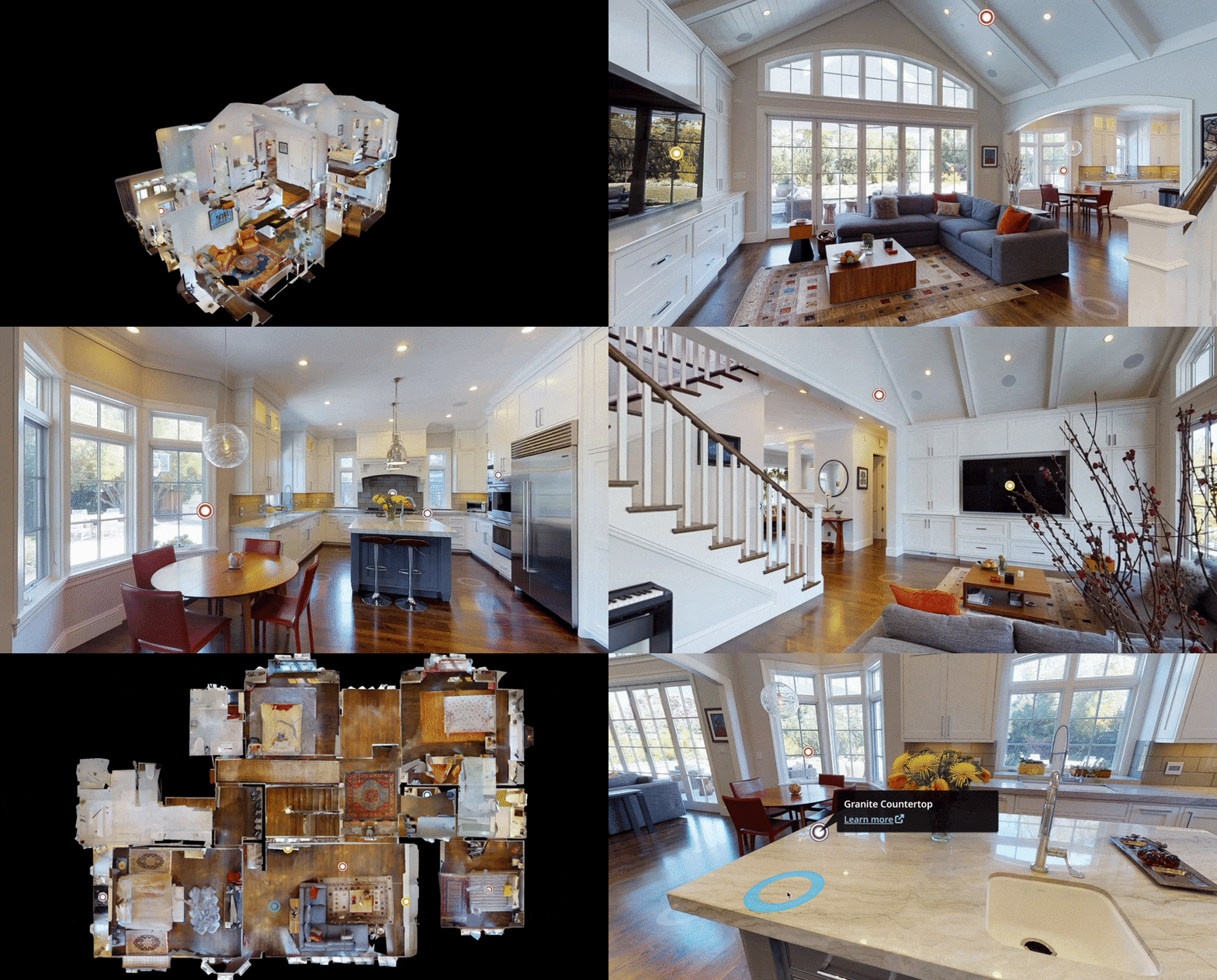
One of the underappreciated advantages of 3D virtual tours is that they are inherently visual-first. Unlike written prospectuses or video narrations that require language comprehension, a virtual tour allows a student to navigate and evaluate a campus regardless of what language they speak. A student in Jakarta, Sao Paulo, or Lagos can walk through a lecture hall in Delft, a library in Munich, or a laboratory in Paris without needing a translator.
That said, universities can enhance the experience by adding multilingual information tags within the tour. These are text overlays placed at key points — a tag on a library entrance might say “24-hour access” in English, German, and Mandarin. A tag on a student services desk might include a QR code linking to translated welcome information. This approach keeps the tour itself language-neutral while providing contextual information in the languages most relevant to the university’s target student populations.
Cultural sensitivity also matters when deciding which spaces to scan. Some spaces that are routine in one culture may carry different expectations in another. Prayer rooms, gender-specific facilities, and dining areas with specific dietary accommodations are worth including — they signal inclusivity to prospective students who may be evaluating whether they will feel welcome and supported on campus.
Seasonal Recruitment Cycles
European university admissions cycles differ from the U.S. system, and this has direct implications for when virtual tours should be ready and how they should be promoted.
Many European programmes offer two intake periods: a primary intake in September or October, and a secondary intake in February or March. The research and decision-making period for the September intake typically peaks between October and January of the preceding academic year. For the February intake, peak research occurs between June and October. This means universities need their virtual tours live and fully functional before these peak periods — not during them.
A university launching a virtual tour in December has missed the early research window for September applicants. The optimal strategy is to have the tour ready by late August or September, so it is available when prospective students begin their research for the following year. For programmes with February intakes, the tour should be in place by May or June.
Universities should also consider updating tours annually or biannually to reflect campus changes — new buildings, renovated facilities, updated student housing. A tour that shows a construction site where a new student centre now stands creates a negative impression. Regular updates keep the tour current and credible.
Implementation for European Campuses
THE FUTURE 3D has the expertise and equipment to scan campuses of any size. We can coordinate scanning logistics for European universities through our project management process:
- Remote consultation — We assess your needs via video call
- Project planning — Define spaces, scheduling, and logistics
- On-site scanning — Professional technicians capture your campus
- Processing and delivery — Tour delivered within 1-2 business days after scanning
Key Spaces for European University Tours
- Signature lecture halls and seminar rooms
- Student accommodation (university-managed housing)
- Libraries and study spaces
- Student unions and social spaces
- Laboratories and research facilities
- Campus grounds, courtyards, and gardens
- City-center locations and surrounding neighborhood context
Getting Started
European universities interested in virtual campus tours can contact us for project scoping and pricing.
Related resources:
Ready to Start Your Project?
Get a free quote and consultation from our 3D scanning experts.
Get Your Free Quote