Most 3D scanning projects go smoothly. The technology is mature, the workflows are proven, and professional scanning providers deliver consistent results. But when projects go wrong, the root cause is almost always a planning or specification error made before the scanner was ever set up on a tripod.
After working on hundreds of scanning engagements across commercial, industrial, and residential projects, these are the five mistakes we see repeatedly. Each one is entirely preventable, and avoiding them will save you time, money, and frustration.
Mistake 1: Not Defining Your Scope of Work

This is the most common and most expensive mistake. A client calls and says “we need to scan our building” without defining what “scan” means in the context of their project. The result is a vague proposal, a mismatched deliverable, and a frustrating conversation after the fact about what was and was not included.
What Goes Wrong
Without a clear scope of work, the following problems occur:
- Coverage gaps: The scanning team scans the main floor but skips the mechanical penthouse, basement utility rooms, or above-ceiling plenums --- spaces that your engineering team actually needs documented.
- Missing areas: Exterior facades, rooftop equipment, loading docks, and parking structures are commonly assumed to be “included” by the client but excluded by the scanning provider because they were never specified.
- Access issues: The scanning team arrives and discovers that half the building is locked, occupied, or inaccessible without special coordination. Field time is wasted waiting for access.
- Budget overruns: The provider quotes based on their interpretation of the scope. When you request additional areas after field work, it triggers a change order with a new mobilization fee.
How to Prevent It
Write a scope of work before requesting quotes. It does not need to be a lengthy document. At minimum, include:
- Building address and total square footage
- Specific floors, wings, or areas to be scanned (list them explicitly)
- Whether exterior facades are included
- Whether mechanical spaces (boiler rooms, electrical rooms, elevator shafts) are included
- Whether above-ceiling or below-floor spaces need to be captured
- Access conditions (operating hours, security requirements, occupied vs. vacant)
- Intended use of the scan data (renovation design, facility management, as-built documentation, BIM conversion)
Our quote request form creates a detailed specification document that covers all of these elements automatically, formatted for direct inclusion in your procurement process.
The Real Cost of This Mistake
A typical re-mobilization to scan missed areas costs $1,500-$3,000 for a local project (travel, setup, field time, reprocessing). For projects that require provider travel, add airfare and per diem. More importantly, the re-scan delays the project timeline by 1-2 weeks.
Mistake 2: Requesting the Wrong File Formats

File format mistakes create expensive downstream problems that do not become apparent until your design or engineering team tries to use the scan data --- often weeks after delivery.
What Goes Wrong
- Format incompatibility: Your Revit team receives E57 files but needs RCP (Autodesk ReCap) format. They can convert it, but the process takes hours and may not preserve all data attributes.
- Missing colorization: You receive a monochrome point cloud when your team needs colorized (RGB) data for visual reference during design.
- Wrong coordinate system: The scan data is delivered in local coordinates when your project requires state plane or UTM coordinates for integration with survey data or GIS systems.
- Oversized files: The full-resolution point cloud is 200GB and your team’s workstations cannot handle it. A decimated version at 5mm spacing would have been sufficient and 10 times smaller.
- Single format delivery: You receive only RCP files, but your structural engineer uses Tekla and your MEP consultant uses AutoCAD Plant 3D --- both need different formats.
How to Prevent It
Before requesting proposals, consult with every team that will use the scan data and document their requirements:
- Primary file format: What software will be the primary consumer of this data? (Revit = RCP, GIS = LAS, Universal = E57)
- Secondary formats: Do other teams need the data in different formats? Request all needed formats in the original scope.
- Colorization: Does your workflow require RGB-colorized point clouds?
- Coordinate system: Local project coordinates, state plane, UTM, or a custom coordinate system tied to existing survey control?
- Resolution/density: What point spacing does your workflow actually require? (5mm is standard for most AEC work; 1-2mm for heritage documentation; 10-20mm for large industrial sites)
For a detailed comparison of point cloud file formats and when to use each one, see our point cloud file format guide. If you are unsure which format to choose, our file format picker tool walks you through a quick assessment.
The Real Cost of This Mistake
Format conversion is not free. Converting a large point cloud from E57 to RCP takes hours of processing time and requires specialized software (Autodesk ReCap Pro costs around $355 per year). If the coordinate system is wrong, rework requires the scanning provider to reprocess the entire dataset against new control points --- potentially a $2,000-$5,000 change order. If the wrong resolution was delivered, there may be no fix short of re-scanning.
Mistake 3: Skipping Survey Control
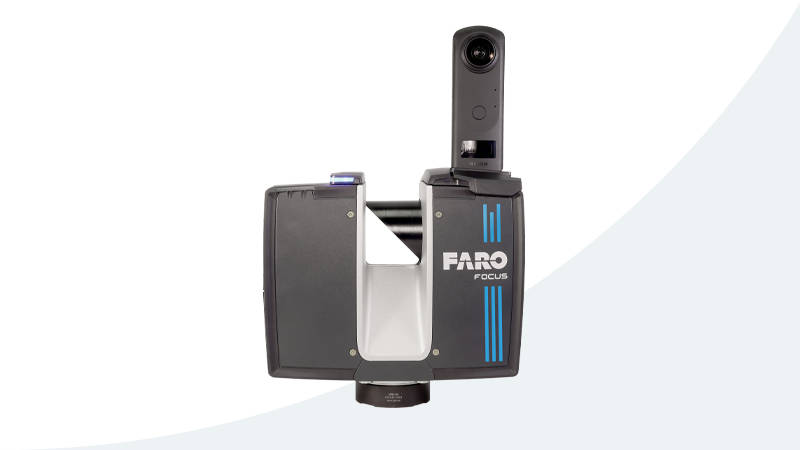
Survey control is the process of establishing precise reference points in the building that tie the scan data to a known coordinate system. It is the foundation of scan accuracy, and skipping it is one of the costliest shortcuts in the industry.
What Goes Wrong
Without survey control:
- The point cloud floats in space: It has excellent internal accuracy (relative measurements between points are precise) but no connection to real-world coordinates. This means the data cannot be aligned with site plans, property surveys, existing CAD drawings, or other geospatial data.
- Multi-day scans drift: On large projects scanned over multiple days, without survey control targets to anchor each scanning session, cumulative registration errors can push the point cloud out of tolerance. What starts as plus or minus 3mm error can grow to plus or minus 20mm or more across a large building.
- Floor-to-floor alignment degrades: Each floor scanned independently may be internally accurate, but without control tying the floors together, vertical alignment between floors can be off by centimeters --- a serious problem for MEP coordination through floor penetrations.
- Integration fails: When your design team tries to overlay the scan data with existing CAD or BIM models, nothing aligns. Hours are spent manually adjusting the point cloud, introducing human error into what was supposed to be a precision dataset.
How to Prevent It
Require survey control in your scope of work when any of the following conditions apply:
- The scan data needs to align with existing drawings, surveys, or models
- The project spans multiple floors or buildings
- The scanning will take more than one day
- The data will be used for construction coordination (where dimensional accuracy matters)
- The data needs to be georeferenced (tied to state plane, UTM, or another coordinate system)
For smaller projects (single room, single floor, single day), cloud-to-cloud registration without survey control may be sufficient. But for anything larger, the incremental cost of placing survey targets (typically $500-$2,000 depending on project size) is trivial compared to the cost of fixing alignment problems after delivery.
For projects requiring formal survey-grade control networks, coordinate with a professional surveying firm to establish control points before the scanning team arrives.
The Real Cost of This Mistake
Retroactively adding survey control to an already-delivered point cloud is often impossible without re-scanning portions of the building. If the data needs to be georeferenced after the fact, the scanning provider must return to the site, establish control, and rescan reference areas --- typically a $3,000-$8,000 change order for a medium-sized project. If alignment issues are discovered during BIM modeling, the BIM firm absorbs hours of manual adjustment that gets passed through as cost overruns.
Mistake 4: Over-Specifying the Deliverables
This mistake is the opposite of Mistake 1. Instead of under-defining the scope, the client requests deliverables far beyond what the project actually needs --- driving up cost and timeline without adding value.
What Goes Wrong
- Requesting LOD 400 BIM models when LOD 200 is sufficient: A facility management team that needs room layouts and basic measurements does not need fabrication-level BIM models. LOD 400 costs 3-5 times more than LOD 200 and takes 3-5 times longer to produce. (Note: BIM modeling is a separate service from scanning --- see our scan-to-BIM guide for details on how these two phases work together.)
- Requesting 1mm point cloud resolution when 5mm is sufficient: Ultra-high resolution scans require more scan positions, longer field time, more processing time, and produce larger files. For most AEC projects, 5mm point spacing captures more than enough detail. Heritage documentation and forensic analysis are among the few applications that genuinely need 1-2mm resolution.
- Requesting full-color 3D mesh models when a point cloud is sufficient: 3D mesh generation is an additional processing step that adds cost. If your workflow uses point clouds directly (as most Revit and CAD workflows do), a mesh adds no value.
- Requesting drone scanning of the exterior when only the interior matters: Aerial scanning of building exteriors adds $2,000-$10,000 to a project. If your renovation only involves interior spaces, exterior scanning is wasted budget.
- Requiring certified survey accuracy when project tolerances do not demand it: Tying scans to licensed survey control costs more and requires coordination with a surveying firm. For most interior renovation projects, the scanner’s inherent accuracy (plus or minus 2-4mm) is more than sufficient without formal certification.
How to Prevent It
Before specifying deliverables, answer this question: What will the scan data be used for?
Then match the specification to the use:
| Use Case | Recommended Specification |
|---|---|
| Renovation design reference | 5mm point cloud, E57 or RCP, local coordinates |
| Facility management and space planning | 5-10mm point cloud, E57, basic colorization |
| BIM conversion at LOD 300 | 3-5mm point cloud, RCP format, survey control recommended |
| Heritage documentation | 1-2mm point cloud, E57, full RGB colorization, georeferenced |
| Construction progress monitoring | 5mm point cloud, aligned to project coordinate system |
| Insurance and compliance documentation | 5mm point cloud, colorized, timestamped |
Use our 3D scanning assessment tool to determine exactly what specifications your project requires, without over-building the scope.
The Real Cost of This Mistake
Over-specification routinely adds 30-100% to scanning costs and can add 200-500% to downstream BIM modeling costs. A $10,000 scanning project at appropriate specifications can become a $15,000 project at over-specified resolution. A BIM modeling engagement at LOD 300 can cost several times less than the same project at LOD 400 --- with no additional value to the client’s actual use case.
Mistake 5: Confusing Deliverable Types
This is perhaps the most consequential mistake because it leads to the most dramatic expectation gap. The client expects one type of deliverable and receives another, leading to disappointment, disputes, and sometimes project restarts.
What Goes Wrong
The most common confusion is between these three fundamentally different deliverables:
1. Point Cloud
A dataset of millions of measured 3D coordinates representing every visible surface. It is raw spatial data --- precise, complete, and extraordinarily dense --- but it contains no intelligent objects. A wall is just a collection of points, not a “wall” that your software recognizes. You can measure from it, visualize it, and reference it, but you cannot edit individual building elements. Learn more in our guide to point clouds.
2. 3D Mesh Model
A surface model generated from the point cloud where points are connected into triangular faces to create a continuous surface. It looks like a 3D model and is useful for visualization, but it still contains no intelligent objects --- it is a visual shell, not a BIM model.
3. BIM Model (Revit, IFC)
An intelligent model where every element is a defined object with embedded properties. A wall is a wall object with material, thickness, fire rating, and other metadata. This is what architects and engineers typically mean when they say “model” --- and creating it requires skilled BIM professionals to trace the point cloud data into parametric objects. This is a separate service from scanning.
The Common Misunderstanding
Clients frequently ask for a “3D model” without specifying which type. A scanning provider delivers a point cloud (the standard scanning deliverable). The client opens it and says, “This is not a model --- I wanted walls and rooms, not a cloud of dots.” The provider has delivered exactly what they quoted, but the client expected something fundamentally different.
Another common variant: the client asks for “scan-to-BIM” expecting a finished Revit model, while the scanning provider interprets this as “BIM-ready scan data” --- a point cloud in RCP format, ready for BIM conversion by a modeling firm. Both interpretations are technically valid, which is why explicit specification matters.
How to Prevent It
Use precise language in your scope of work:
- “Registered point cloud in E57 format” if you need the scanning deliverable only
- “BIM model in Revit format at LOD 300” if you need the full scan-to-BIM deliverable (and understand that this involves both scanning and modeling services, potentially from separate providers)
- “As-built 2D floor plans derived from point cloud data” if you need traditional as-built floor plans --- a downstream drafting deliverable produced from the scan data by a CAD/drafting team, separate from the scanning itself
- “3D mesh model in OBJ format” if you need a visual 3D model for rendering or visualization
Never use vague terms like “3D model,” “digital model,” or “scanning deliverable” without further definition. If the proposal you receive uses these terms without specifying exactly what format and what type of output, ask for clarification before signing.
For help determining which deliverable type your project needs, our how 3D scanning works guide explains each deliverable type in detail.
The Real Cost of This Mistake
If you receive a point cloud when you expected a BIM model, the gap between what you have and what you need is the entire BIM modeling engagement --- potentially tens of thousands of dollars depending on project size and LOD level. If you receive a BIM model when you only needed a point cloud, you overpaid significantly. Either way, the project is delayed while the correct deliverable is produced or procured.
The Prevention Checklist

Before requesting any 3D scanning proposal, work through this checklist:
Scope Definition:
- Building address, total area, and specific spaces are listed
- Interior and exterior scope are clearly stated
- Mechanical, electrical, and utility spaces are explicitly included or excluded
- Access conditions are documented (hours, security, occupied spaces)
- Known obstructions or hazards are noted
File Format and Specifications:
- Primary file format is specified based on downstream software
- Secondary formats are listed if multiple teams will use the data
- Coordinate system is defined (local vs. georeferenced)
- Point density and resolution are specified
- Colorization requirement is stated
Survey Control:
- A decision is made on whether survey control is needed
- If needed, control points are specified or a surveying firm is engaged
- Coordinate system alignment requirements are documented
Deliverable Type:
- Exact deliverable type is specified (point cloud, mesh, BIM model, 2D plans)
- If BIM model is needed, LOD level is specified
- The distinction between scanning deliverable and BIM modeling deliverable is understood
Budget Alignment:
- Specifications match actual project needs (not over-specified)
- Budget accounts for both scanning and any downstream modeling
- Timeline accounts for both scanning and modeling phases
Our quote request form automates this checklist into a professional specification document. It asks you the right questions and produces a scope of work that prevents all five of these mistakes.
Frequently Asked Questions
What if I am not sure what deliverable type I need?
Start with the end use. What software will consume the data? What decisions will be made from it? If you are designing a renovation in Revit, you need either RCP point cloud files (if your team will model from the point cloud) or a BIM model (if you want a firm to handle that modeling). If you are documenting existing conditions for reference, a point cloud in E57 format is likely sufficient. Our 3D scanning assessment tool helps you determine the right approach.
How much does it cost to fix these mistakes after the fact?
Re-mobilization to scan missed areas: $1,500-$5,000 depending on location and project size. File format reprocessing: $500-$2,000. Adding survey control after delivery: $3,000-$8,000, potentially requiring partial re-scanning. Over-specification does not have a “fix cost” --- it is simply money spent on capability the project did not need. Deliverable type confusion is the most expensive to resolve because it may require engaging an entirely new service provider.
Should I write the scope of work myself or have the scanning provider help?
Both approaches work. If you have experience with scanning projects, write your own scope and use it to evaluate proposals on equal terms. If this is your first project, ask the provider to help draft the scope --- but make sure you review and approve it before any work begins. A good provider will ask detailed questions about your use case, timeline, and downstream workflow, rather than simply accepting “scan the building” as a sufficient brief.
What is the single most important thing to get right?
Defining what the data will be used for. If the scanning provider understands the end use --- renovation design, facility management, BIM conversion, compliance documentation --- they can recommend the right equipment, resolution, format, and coordinate system. Without that context, they will make assumptions that may not match your actual needs. Every other specification flows from this starting point.
Can I change the deliverable specifications after scanning is complete?
File format changes (E57 to RCP, for example) are usually straightforward reprocessing. Resolution changes typically require re-scanning if you need higher resolution than what was originally captured. Coordinate system changes require reprocessing against control and may need additional field work. Deliverable type changes (point cloud to BIM model) require engaging a BIM modeling firm --- the scan data itself does not change, but a new service is needed to transform it.
Ready to get your scanning project right the first time? Request a quote or request a quote from THE FUTURE 3D.
Ready to Start Your Project?
Get a free quote and consultation from our 3D scanning experts.
Get Your Free Quote