3D Facility Documentation for School Districts
School districts manage portfolios of buildings — sometimes dozens or hundreds of facilities — that require ongoing maintenance, renovation, and compliance documentation. 3D scanning technology provides a scalable way to document these facilities with precision that traditional methods cannot match.
Why School Districts Need 3D Documentation
Facility Condition Assessments (FCA)
Most districts are required to conduct periodic facility condition assessments. 3D scans create detailed baseline documentation of building conditions — walls, floors, ceilings, fixtures, and systems — with time-stamped visual records that support assessment reporting.
A key metric in facility condition assessments is the Facility Condition Index (FCI), which is calculated by dividing the cost of deferred maintenance and necessary repairs by the current replacement value of the building. An FCI below 0.05 (5%) generally indicates a building in good condition, while an FCI above 0.10 (10%) signals significant deferred maintenance. 3D documentation provides quantitative data that supports FCI calculations — precise measurements of damaged areas, visual evidence of deterioration, and spatial context for cost estimation.
When a district manages dozens or hundreds of buildings, consistent FCI scoring requires consistent documentation methods. Using the same 3D scanning process across all facilities creates a standardised baseline for benchmarking. A district can compare buildings objectively: which schools have the highest FCI scores, where are maintenance dollars most urgently needed, and how have conditions changed since the last assessment cycle. This data-driven approach replaces subjective walkthroughs with measurable evidence that supports budget requests to school boards and state agencies.
Capital Improvement Planning
When planning renovations or additions, accurate existing-condition documentation is essential. 3D scans provide measurements, floor plans, and spatial data that architects and engineers need to design improvements. This is especially valuable for older buildings where original drawings may not exist or may no longer reflect current conditions.
ADA Compliance
Documenting accessibility features — ramp slopes, doorway widths, restroom configurations, signage — provides evidence of compliance or identifies areas needing improvement. 3D scans capture these details precisely.
Insurance and Risk Documentation
3D scans provide time-stamped, comprehensive records of building conditions that serve as valuable evidence for insurance purposes. When a school suffers damage from a storm, fire, flooding, or vandalism, having a pre-existing 3D scan of the affected areas gives the district documentation of the building’s condition before the incident occurred. This baseline evidence can accelerate insurance claims by removing ambiguity about what was damaged and what was pre-existing.
For districts in hurricane-prone, tornado-prone, or flood-prone regions, pre-event documentation is particularly important. An insurance adjuster reviewing a claim for roof damage can reference the 3D scan to verify the roof’s condition before the storm. Without this baseline, disputes about pre-existing damage versus storm damage can delay claims by months.
3D documentation also serves as pre-renovation baseline evidence. Before a major renovation project begins, scanning the existing conditions creates an indisputable record. If a contractor disputes the scope of work required, or if unexpected conditions are discovered during construction, the baseline scan provides objective evidence of what the building looked like before work started. This reduces disputes between the district and contractors, protects the district’s financial interests, and supports warranty claims if workmanship issues arise after the project is completed.
Bond and Grant Applications
Capital improvement bond measures and federal/state facility grants often require detailed documentation of existing conditions. 3D visual documentation strengthens applications by providing inspectors and decision-makers with clear evidence of facility needs.
Scanning Approaches for Districts
Matterport Virtual Tours ($1,500+/building)
- Visual walkthroughs for each building
- Schematic floor plans
- Dual-purpose: marketing + documentation
- Best for: Overall facility overview, enrollment marketing, parent engagement
3D Laser Scanning ($0.20-$0.70/sqft)
- Point cloud data with millimeter accuracy
- CAD-compatible output (E57, RCP, LAS)
- Best for: Renovation design, structural assessment, precise measurements
- Ideal when architects need as-built documentation for design work
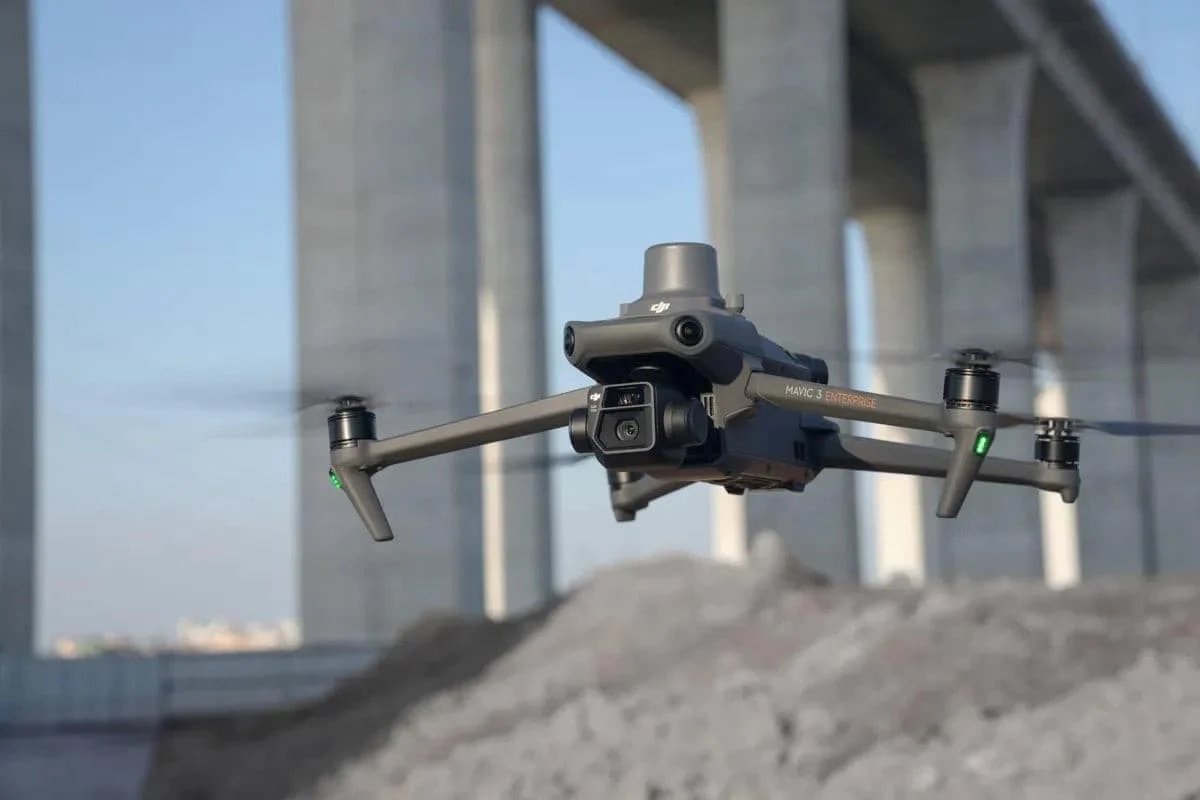
Drone Photogrammetry ($1,500+/campus)
- Aerial mapping of campus grounds, roofs, parking areas
- 3D terrain models and orthomosaic maps
- Best for: Site planning, roof assessments, campus master planning
Deliverables and Outputs
When a school district engages a 3D documentation provider, it is important to understand what you receive at the end of the project. Deliverables vary depending on the scanning approach used, but a comprehensive documentation package typically includes:
- Matterport Virtual Walkthroughs: Interactive 3D tours that allow stakeholders to navigate through each building remotely. These are accessible via a web link — no software installation required. Board members, administrators, architects, and community members can all view the tours from any device with a browser.
- Point Cloud Files (E57, LAS): High-density measurement data captured by 3D laser scanners. Point cloud files contain millions of precise spatial measurements and can be imported into CAD and BIM software for design work. E57 is the industry-standard open format; LAS is commonly used in surveying workflows.
- CAD-Ready Floor Plans: Schematic floor plans generated from the scan data, showing room layouts, dimensions, door and window positions, and key spatial relationships. These floor plans can serve as the starting point for architectural design work or simply as accurate reference documents for facilities management.
- Measurement Tools: Within the Matterport platform, users can take measurements directly inside the virtual tour — room dimensions, doorway widths, ceiling heights, and distances between objects. This is useful for facilities staff who need quick measurements without visiting the building in person.
- Secure Cloud Hosting: Tours are hosted on secure cloud infrastructure with controlled access. Districts can set permissions so that specific tours are accessible only to authorised personnel, while others are made public for community engagement.
- Shareable Links: Each tour and each set of deliverables comes with shareable links that can be distributed to stakeholders — architects, engineers, insurance adjusters, board members, parents, or community groups — without requiring login credentials or software downloads.
District-Wide Programs
For districts with multiple buildings, we recommend a phased approach:
Phase 1: Priority buildings (oldest, most in need of renovation) — 3-5 buildings Phase 2: Secondary buildings — next 5-10 buildings Phase 3: Remaining portfolio — all other facilities
Volume pricing and multi-year contracts are available for district-wide programs.
For multi-school engagements, we assign a dedicated project manager who serves as a single point of contact for the district throughout the entire programme. The project manager coordinates scheduling across schools, manages logistics with principals and facilities staff, and ensures consistent quality across all deliverables. This removes the administrative burden from district staff, who would otherwise need to coordinate with the scanning team at each individual school.
We also provide training for district facilities staff on how to use the virtual tours and measurement tools effectively. A 30-60 minute remote training session covers navigation, measurement tools, sharing links with stakeholders, and best practices for incorporating tour data into maintenance workflows and capital planning documents.
For districts that want to track facility conditions over time, annual update scanning is available. Returning to each school on a regular cycle — typically annually or biannually — creates a longitudinal record of building conditions. This is valuable for tracking the progression of deferred maintenance, documenting improvements after renovation projects, and providing school boards with year-over-year evidence of facility investment outcomes.
Timeline
Understanding the typical project timeline helps districts plan effectively and set expectations with stakeholders.
Phase 1 — Assessment (1 week): We conduct a remote consultation to understand the district’s goals, review the building portfolio, and determine the appropriate scanning approach for each facility. We identify priority buildings, establish scheduling requirements (scanning typically occurs outside school hours or during breaks), and provide a detailed scope and pricing proposal.
Phase 2 — Scanning (1-3 days per school): Professional technicians scan each building according to the agreed plan. A typical elementary school with 30-50 rooms can be scanned in a single day. Larger middle and high schools with gymnasiums, auditoriums, multiple floors, and separate wings may require 2-3 days. Scanning is quiet and non-disruptive — the equipment captures spaces without any noise, debris, or interruption to school operations.
Phase 3 — Processing (3-5 business days per school): Raw scan data is processed into the final deliverables — virtual tours, floor plans, point cloud files, and measurement tools. Each building’s deliverables go through quality review before being shared with the district. For large multi-school programmes, processing is parallelised so that multiple buildings are processed simultaneously.
Phase 4 — Delivery and Training: Final deliverables are delivered via secure cloud links. The project manager conducts a training session for district facilities staff and any other stakeholders who will use the tour data. The district receives all access credentials, sharing instructions, and documentation for ongoing use.
For a 10-school district, a typical programme from initial consultation to full delivery takes 6-10 weeks, depending on scheduling constraints and the scope of scanning at each school.
Getting Started
Contact us for a free district assessment and volume pricing: Request a quote or call +1-347-998-1464.
Related resources:
Ready to Start Your Project?
Get a free quote and consultation from our 3D scanning experts.
Get Your Free Quote