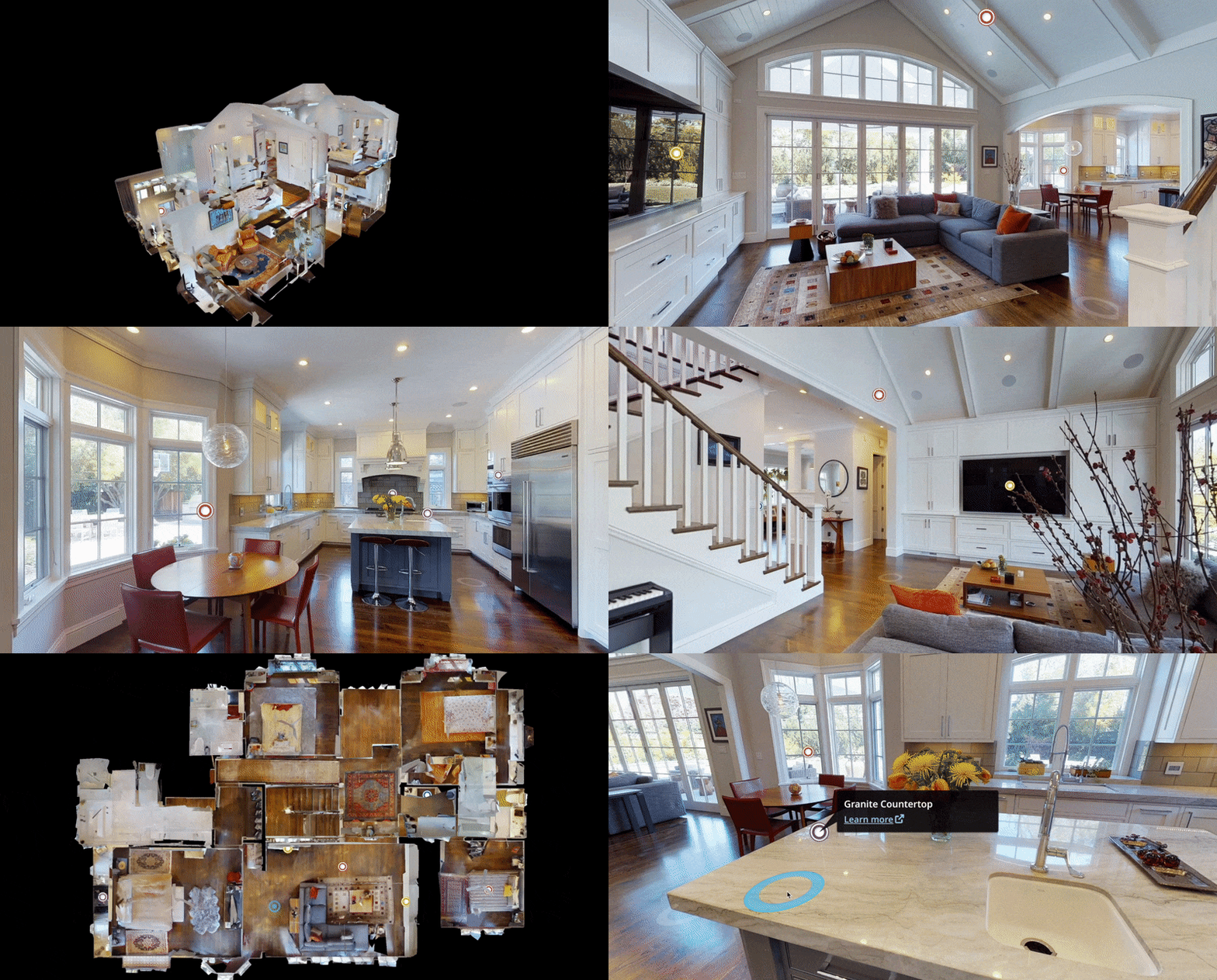
When someone asks “is a virtual tour worth it?” they are really asking a financial question. Not whether the technology is impressive (it is), or whether clients like it (they do), but whether the dollars spent on a virtual tour generate measurably more dollars in return.
This guide compiles the hard data on virtual tour ROI across the industries where 3D scanning delivers the most measurable financial impact. Where specific numbers are cited, we identify the source context. Where data ranges exist, we present the range rather than cherry-picking the most impressive figure.
Real Estate: The Most Measured Market
Real estate is where virtual tour ROI data is most abundant because the outcomes (days on market, sale price, offer count) are directly measurable.
Properties Sell Faster
Multiple industry studies have found that listings with virtual tours spend significantly less time on the market:
- Properties with virtual tours sell up to 31% faster than comparable listings without them. This finding has been reported across multiple real estate industry analyses.
- Homes with 3D tours receive 49% more qualified leads compared to listings with photos only. The qualifier “qualified” is important — virtual tours let buyers self-screen, so the leads that do come through are more serious.
- Time-on-market reduction varies by price point. Luxury properties ($1M+) see the most dramatic improvement because buyers at that price point expect virtual tour access and are more likely to be relocating from another city or country.
Properties Sell at Higher Prices
The correlation between virtual tours and sale price has been documented in several analyses:
- Properties with virtual tours can achieve up to 9% higher sale prices. This premium is attributed to increased buyer competition (more qualified remote buyers submitting offers) and the perception of professionalism and transparency.
- Virtual tours correlate with more offer submissions. Listings with 3D tours receive more offers on average, creating the competitive dynamic that drives prices up.
Agent Productivity
From the agent’s perspective, virtual tours deliver measurable time savings:
- Fewer unproductive showings. Buyers who have already explored a property virtually arrive at physical showings better informed. They have already eliminated properties that do not meet their criteria, meaning the showings that happen are more likely to convert.
- Remote buyer engagement. In markets with significant relocation demand (Miami, New York, Austin, Nashville), virtual tours enable buyers to make informed decisions without traveling for initial viewings.
Real Estate ROI Calculation
For a residential virtual tour starting at $350:
| Metric | Without Tour | With Tour | Improvement |
|---|---|---|---|
| Days on Market | 45 days (avg) | ~31 days | ~31% faster |
| Carrying Cost Saved | - | $500-2,000+ | Reduced holding costs |
| Agent Showing Time | 12 showings avg | 6-8 serious showings | 30-45% time saved |
| Buyer Pool | Local only | Local + remote | Broader competition |
For a typical residential property, the $350 tour cost is recovered many times over through reduced carrying costs alone. A property that sells 14 days faster saves the seller approximately $500-2,000 in mortgage payments, insurance, utilities, and maintenance — before accounting for any sale price premium.
Hospitality: Booking Confidence Drives Revenue

Hotels, resorts, vacation rentals, and event venues see strong measurable returns from virtual tours because the decision to book is fundamentally about space confidence — guests want to know exactly what they are getting.
Engagement and Booking Data
- Virtual tours generate up to 300% more engagement on hotel website listings compared to photos alone. Visitors spend significantly more time exploring properties with 3D tours.
- Booking conversion can increase by up to 12% when virtual tours are available. This improvement is driven by reduced uncertainty — guests who have “walked through” a room or event space virtually are more confident in their booking decision.
- Bounce rates decrease substantially on pages with embedded virtual tours. Visitors stay longer and explore more of the property.
Revenue Impact for Hotels
For a 100-room hotel with an average daily rate of $200:
| Metric | Calculation | Annual Impact |
|---|---|---|
| Rooms/year | 100 rooms x 365 days x 70% occupancy | 25,550 room-nights |
| Revenue at baseline | 25,550 x $200 | $5,110,000 |
| 3% booking increase from virtual tours | 25,550 x 0.03 x $200 | $153,000 |
| Virtual tour cost (one-time scan) | Full property tour | $2,000-$5,000 |
| Hosting (annual) | $240/year | $240 |
| ROI | $153,000 / $5,240 | ~29:1 first year |
Even at a conservative 3% booking increase (well below the reported 12% potential), the return on a single property scan is overwhelming. The tour continues to generate returns year after year with only minimal hosting costs.
Event Venue Impact
For event venues (wedding venues, conference centers, banquet halls), virtual tours serve a different but equally measurable function:
- Site visit conversion. Venues with virtual tours report that prospects who view the 3D tour before a site visit convert to bookings at higher rates because they arrive pre-sold on the space.
- Out-of-market bookings. Destination wedding venues, in particular, benefit from virtual tours because the couple often cannot visit before booking. A virtual tour provides the confidence needed to commit.
- Reduced no-show site visits. Prospects who tour virtually first self-select out if the space does not meet their needs, saving venue staff from unproductive in-person showings.
Apartment Leasing: Reducing Vacancy Loss
For apartment communities and property management companies, every day a unit sits vacant is direct revenue loss. Virtual tours measurably reduce vacancy periods.
Leasing Data
- Virtual tours can reduce tenant acquisition costs by up to 28%. This reduction comes from fewer physical showings needed per lease signed, less leasing agent time per prospect, and faster decision-making by qualified applicants.
- Self-guided virtual tours enable 24/7 leasing. Prospects can explore available units at any time, not just during office hours. This expands the effective leasing window and captures interest from prospects in different time zones.
- Application rates increase when virtual tours are available. Prospects who can thoroughly explore a unit virtually are more likely to submit an application, and less likely to submit applications for units that do not actually meet their needs.
Vacancy Cost Analysis
For a 200-unit apartment community with $1,800 average monthly rent:
| Metric | Without Tours | With Tours | Impact |
|---|---|---|---|
| Average vacant days per turnover | 30 days | 21-25 days | 5-9 days saved |
| Annual turnovers (20% rate) | 40 units | 40 units | Same |
| Revenue per vacant day | $60/day | $60/day | Same |
| Annual vacancy loss | $72,000 | $50,400-$60,000 | $12,000-$21,600 saved |
| Virtual tour cost | $0 | $350-750/unit | One-time investment |
| Total tour investment | $0 | $14,000-$30,000 | Year 1 only |
The vacancy reduction alone pays for the entire building’s virtual tour production in the first year. In subsequent years, tours continue to drive the same vacancy reduction with only hosting costs.
Insurance: Speed and Accuracy in Claims
The insurance industry’s use of virtual tours is less about marketing and more about operational efficiency and documentation accuracy.
Claims Processing Impact
- Faster initial assessment. Adjusters can review property condition and damage extent remotely via 3D tour before dispatching field inspectors. This triages claims more efficiently and prioritizes field visits for cases that truly need in-person assessment.
- Reduced dispute rates. Pre-loss condition documentation via 3D tours provides objective, timestamped evidence of property condition before a claim event. This reduces disputes about pre-existing conditions.
- Lower documentation costs. A single Matterport scan captures comprehensive visual documentation of an entire property in one visit, versus multiple in-person inspections.
Pre-Loss Documentation ROI
For insurance purposes, the most valuable application is pre-loss documentation — scanning a property before any damage occurs to create a verified record of condition.
| Metric | Traditional Documentation | 3D Virtual Tour | Improvement |
|---|---|---|---|
| Documentation time | 2-4 hours | 1-2 hours | 50% faster |
| Coverage completeness | Photos only | Full 3D walkthrough | More comprehensive |
| Dispute risk | Higher (interpretation) | Lower (objective record) | Reduced litigation |
| Re-inspection need | Often required | Rarely needed | Cost savings |
| Historical record | Static photos | Interactive 3D model | Superior evidence |
Fraud Reduction
Pre-loss 3D documentation also contributes to fraud reduction. When a comprehensive 3D record of a property’s condition exists before a claim, exaggerated or fraudulent claims become significantly more difficult to sustain. While precise fraud reduction figures vary by carrier and market, the principle is straightforward: better documentation means better claims outcomes.
Construction and AEC: Progress Documentation ROI

Architecture, Engineering, and Construction (AEC) firms use virtual tours for a different purpose — documenting construction progress and as-built conditions.
Construction Documentation Benefits
- Reduced rework. Regular 3D documentation of construction progress helps catch deviations from plans early, before they compound into expensive rework. Industry data suggests that rework accounts for approximately 5-12% of total construction costs.
- Remote stakeholder access. Project owners, architects, and engineers can review construction progress remotely via 3D tours instead of scheduling in-person site visits. This is particularly valuable for projects with stakeholders in multiple cities.
- Dispute resolution. Timestamped 3D documentation creates an objective record of construction conditions at specific points in time. This evidence is valuable in disputes over work quality, completion milestones, and change orders.
- Safety training. Virtual tours of complex job sites can be used for safety orientation before workers arrive on-site, reducing the time needed for physical orientation walks.
Construction Progress Documentation ROI
For a $10M commercial construction project:
| Metric | Without Documentation | With Regular 3D Scans | Impact |
|---|---|---|---|
| Rework cost (8% average) | $800,000 | $600,000-$720,000 | $80,000-$200,000 saved |
| Stakeholder site visits/month | 4-6 in-person | 1-2 in-person + virtual | 50-75% reduction |
| Travel cost per visit | $500-2,000 | $500-2,000 (fewer trips) | Significant savings |
| Monthly scan cost | $0 | $750-$2,000 | $9,000-$24,000/year |
| Dispute resolution cost | Higher | Lower (evidence available) | Variable savings |
Even a modest reduction in rework — catching one major deviation early — can save more than the entire annual cost of regular 3D documentation.
Calculating ROI for Your Specific Situation
The ROI of virtual tours depends heavily on your industry, property values, and how you use the technology. Here is a framework for calculating your specific return:
Step 1: Identify Your Primary Benefit
| Your Industry | Primary ROI Driver | Secondary Benefits |
|---|---|---|
| Residential RE | Faster sales, higher prices | Fewer showings, remote buyers |
| Commercial RE | Tenant attraction, lower vacancy | Marketing differentiation |
| Hospitality | Booking conversion increase | Guest confidence, reduced complaints |
| Apartments | Vacancy reduction | Leasing efficiency, remote applications |
| Insurance | Claims efficiency | Fraud reduction, dispute resolution |
| Construction | Rework reduction | Remote monitoring, dispute evidence |
Step 2: Calculate Your Baseline Cost
What does the problem cost you today?
- Real estate: Calculate carrying costs per day x average days on market
- Hospitality: Calculate lost revenue from booking hesitation (current conversion rate gap)
- Apartments: Calculate vacancy loss per day x average vacant days per turnover
- Insurance: Calculate average claim processing cost and dispute rate
- Construction: Calculate rework percentage x project value
Step 3: Apply Conservative Improvement Estimates
Use the lower end of reported improvements:
| Industry | Conservative Estimate | Moderate Estimate |
|---|---|---|
| RE days on market | 15% reduction | 31% reduction |
| Hotel booking conversion | 3% increase | 12% increase |
| Apartment vacancy | 15% reduction | 28% reduction |
| Insurance processing | 20% faster | 40% faster |
| Construction rework | 10% reduction | 25% reduction |
Step 4: Compare Against Tour Cost
Virtual tour costs from THE FUTURE 3D:
| Property Type | Tour Cost | Annual Hosting |
|---|---|---|
| Residential | $350-$1,000 | $240 |
| Commercial | $750-$2,000 | $240 |
| Large Venue | $2,000-$5,000+ | $240 |
Regional pricing note: Pricing shown reflects average US rates. Actual costs vary by location based on local market conditions. Contact us for a precise quote.
Why the Numbers Understate the Real Impact

The data presented in this guide focuses on directly measurable financial outcomes. But virtual tours deliver additional value that is harder to quantify:
Brand and Competitive Differentiation
In competitive markets, offering virtual tours signals professionalism, technological sophistication, and transparency. This is particularly valuable for:
- Real estate agents competing for listings
- Hotels competing for online bookings
- Property managers competing for quality tenants
SEO and Online Visibility
Virtual tours increase time-on-page, reduce bounce rates, and generate additional content for search engines. Properties with embedded 3D tours often rank better in local search results.
Client Satisfaction and Referrals
Clients who receive virtual tour services are more likely to recommend the service provider. The “wow factor” of a professional 3D tour creates memorable positive experiences that drive word-of-mouth referrals.
Future-Proofing
As AI, AR, and spatial computing continue to evolve, having 3D spatial data of properties creates options for future applications that do not exist yet. The 3D scan data captured today may power applications we have not imagined yet.
Key Takeaways
-
Real estate ROI is the most proven — properties with virtual tours sell up to 31% faster and can achieve up to 9% higher sale prices. At $350+ per tour, the investment is recovered from reduced carrying costs alone.
-
Hospitality ROI is the most dramatic — up to 300% more engagement and up to 12% booking increases create return ratios that can exceed 29:1 in the first year.
-
Apartment leasing ROI is the most consistent — up to 28% reduction in tenant acquisition costs and measurable vacancy reduction deliver reliable annual returns.
-
Insurance ROI is operational — faster claims processing, better documentation, and reduced fraud translate to measurable cost savings across claim portfolios.
-
Construction ROI is about risk reduction — catching even one rework issue early can save more than the entire cost of documentation.
-
Use conservative estimates for your own ROI calculations. Even the low end of reported improvements typically justifies the investment.
-
The real ROI is cumulative — virtual tours are a one-time cost (plus hosting) that delivers returns for months or years after creation.
Ready to see the ROI for your specific situation? Get a free quote from THE FUTURE 3D, or use our cost calculator to estimate your virtual tour investment.
Ready to Start Your Project?
Get a free quote and consultation from our 3D scanning experts.
Get Your Free Quote