If you are budgeting for a scan-to-BIM project in 2026, you are dealing with two distinct cost components that are often quoted together but come from entirely different service providers. Understanding where your money goes — and who does what — prevents budget surprises and helps you get the most value from your investment.
This guide breaks down both sides of the cost equation: what it costs to capture the 3D scan data, and what it costs to convert that data into an intelligent BIM model.
Important: Understanding the Two-Part Workflow
Before diving into numbers, it is critical to understand how a scan-to-BIM project actually works.
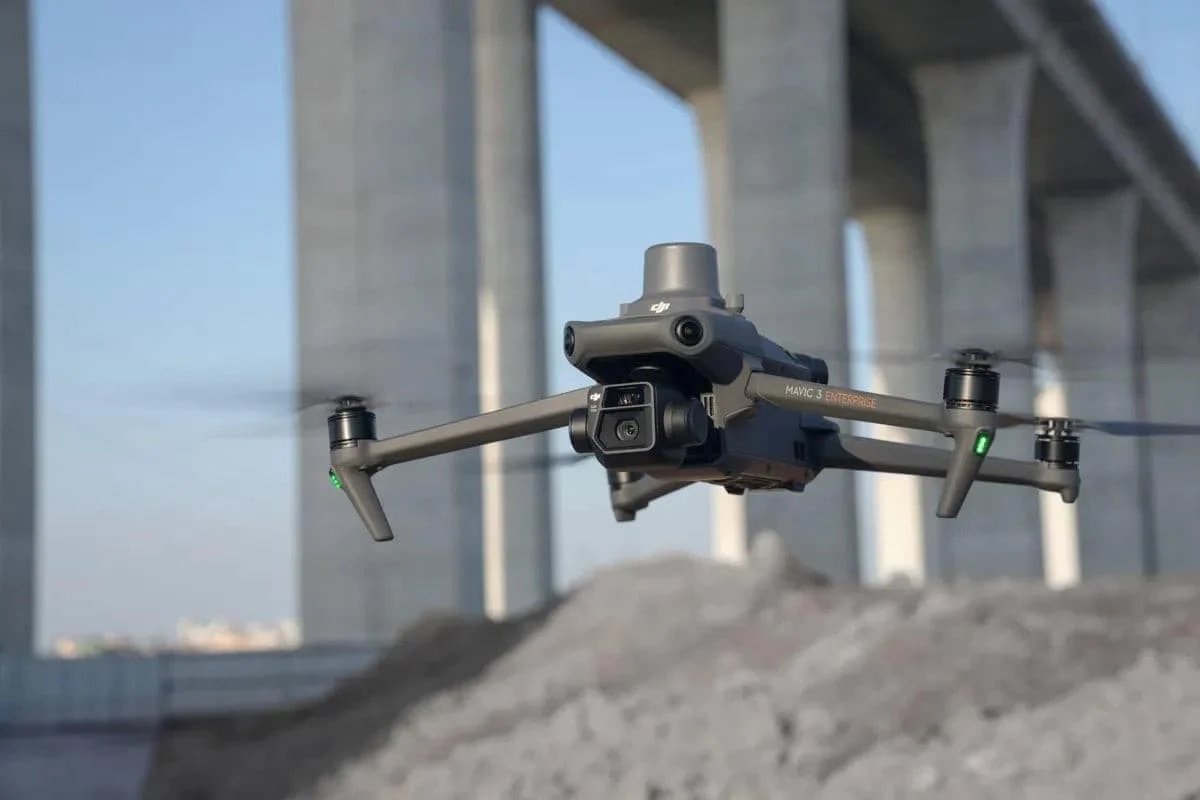
Step 1: 3D Laser Scanning — A scanning specialist (like THE FUTURE 3D) captures the physical building using professional laser scanners, producing a registered point cloud in industry-standard formats (E57, RCP, LAS, OBJ). This is the measurement and data capture phase.
Step 2: BIM Modeling — A BIM modeling firm or your in-house Revit team imports the point cloud into BIM software and traces over the scan data to create an intelligent Building Information Model with parametric objects, material properties, and system relationships.
THE FUTURE 3D provides the scanning side of this workflow. We deliver production-ready, BIM-conversion-ready point cloud data that your BIM team or a third-party BIM modeling firm can work with directly. We specialize in capturing the highest quality scan data — the foundation that everything else builds upon. The BIM modeling itself is performed by the client’s team or by specialized BIM services firms.
This distinction matters for budgeting because the two components have different pricing structures, different providers, and different timelines. Our BIM scanning guide covers the full workflow in detail.
Part 1: 3D Laser Scanning Costs (Data Capture)
The scanning phase is priced based on the size and complexity of the building, the number of scan positions required, and the equipment deployed.
Typical Scanning Cost Ranges
| Project Size | Typical Total Cost | Day Rate Equivalent | Typical Duration |
|---|---|---|---|
| Small (under 5,000 sqft) | $2,000-$6,000 | $2,500-$4,000 | Half day to 1 day |
| Medium (5,000-25,000 sqft) | $3,000-$15,000 | $3,500-$5,500/day | 1-2 days |
| Large (25,000-100,000 sqft) | $10,000-$40,000 | $3,500-$5,500/day | 2-5 days |
| Very Large (100,000+ sqft) | $15,000-$100,000+ | $3,500-$5,500/day | 1-3 weeks |
Per-square-foot rates for commercial laser scanning typically range from $0.20 to $0.70/sqft depending on project complexity, volume, and location. These ranges reflect the field scanning and data processing to deliver a clean, registered point cloud. Pricing varies by metro area based on local market conditions and project logistics.
What Affects Scanning Cost
Several factors push scanning costs toward the higher or lower end of these ranges:
- Building complexity — A simple open office floor scans much faster than a dense mechanical room with pipes, ducts, and equipment blocking sightlines
- Access restrictions — Occupied buildings, active construction sites, and secured facilities require coordination, escorts, or after-hours work that increase cost
- Number of scan positions — More complex spaces require more scan setups. A dense mechanical room may need a scan position every 5-10 feet, while an open warehouse might need one every 30-50 feet
- Deliverable formats — Standard delivery (E57, RCP) is included. Custom processing, colorization, or specialized deliverables may add 10-20% to the processing cost
- Travel — Projects outside your scanning provider’s local market incur travel expenses
For a detailed breakdown of scanning costs by project type, see our 3D scanning cost guide.
Part 2: BIM Modeling Costs (Third-Party or In-House)
The BIM modeling phase — where scan data is converted into an intelligent Revit model — is priced based on the Level of Development (LOD) required, the disciplines included, and the complexity of the building systems.
This work is performed by BIM modeling firms, not by the scanning provider. Costs vary significantly based on the firm’s location, expertise, and the specific project requirements.
BIM Modeling Cost Ranges by LOD
| LOD Level | What It Includes | Cost Per Sq Ft | Best For |
|---|---|---|---|
| LOD 200 | Basic geometry, approximate room layouts, major walls | $0.50-$1.50 | Space planning, basic renovation design |
| LOD 300 | Accurate geometry, identified systems, true dimensions | $1.50-$3.50 | Design development, most renovation projects |
| LOD 300 + MEP | Architectural + mechanical/electrical/plumbing | $2.50-$5.00 | Full coordination, major renovations |
| LOD 350 | Coordination-ready, includes connections and interfaces | $3.00-$6.00 | Construction coordination, clash detection |
| LOD 400 | Fabrication-ready, manufacturer-specific detail | $3.50-$10.00+ | Fabrication, complex industrial projects |
What Affects BIM Modeling Cost
- Number of disciplines — Architectural only is the baseline. Adding structural, mechanical, electrical, and plumbing each increases cost by 30-60%
- Building age and complexity — Historic buildings with irregular geometry, non-standard construction, and hidden conditions cost more to model than modern steel-frame buildings
- MEP density — Mechanical rooms, data centers, and industrial plants with extensive piping and ductwork are the most expensive spaces to model per square foot
- Accuracy requirements — Tighter tolerance specifications require more careful modeling and more QA iterations
- Turnaround time — Rush projects (under 2 weeks for a full building) typically carry a 25-50% premium
Total Project Cost Examples

Here is what a complete scan-to-BIM project looks like when you combine both phases:
Example 1: 10,000 sqft Office Renovation (LOD 300, Architectural Only)
| Component | Cost Range |
|---|---|
| 3D scanning (1 day field work + processing) | $3,000-$6,000 |
| BIM modeling (LOD 300, architectural) | $15,000-$35,000 |
| Total | $18,000-$41,000 |
Example 2: 50,000 sqft Commercial Building (LOD 300, Arch + MEP)
| Component | Cost Range |
|---|---|
| 3D scanning (2-3 days field work + processing) | $8,000-$20,000 |
| BIM modeling (LOD 300, arch + struct + MEP) | $125,000-$250,000 |
| Total | $133,000-$270,000 |
Example 3: 200,000 sqft Industrial Facility (LOD 350, Full Coordination)
| Component | Cost Range |
|---|---|
| 3D scanning (1-2 weeks field work + processing) | $20,000-$50,000 |
| BIM modeling (LOD 350, all disciplines) | $600,000-$1,200,000+ |
| Total | $620,000-$1,250,000+ |
The pattern is clear: scanning costs are a small fraction of total scan-to-BIM costs. Typically 5-15% of the total project budget. The BIM modeling phase — the human-intensive work of creating intelligent objects from point cloud data — is where the majority of the investment goes.
This is exactly why it makes sense to invest in the highest quality scan data upfront. Accurate, complete scan data reduces modeling rework, speeds up the BIM conversion, and prevents costly field re-visits. Saving $2,000 on scanning only to spend $10,000 on modeling rework is a bad trade.
ROI Analysis: Why Scan-to-BIM Pays for Itself
The cost of a scan-to-BIM project needs to be evaluated against what it prevents:
Cost of Not Scanning
- Field conflicts from inaccurate manual measurements: $5,000-$50,000 per conflict in rework, delays, and change orders
- Design rework from wrong existing conditions: 5-15% of total design budget
- Construction delays from unexpected conditions: $1,000-$10,000+ per day depending on project size
- Re-measurement trips when initial manual measurements prove insufficient: $2,000-$5,000 per trip
A single field conflict avoided by accurate scan data can pay for the entire scanning investment. On a typical $5 million renovation project, scan-to-BIM costs represent 1-3% of the construction budget while potentially preventing 5-15% in change orders and rework.
When Scan-to-BIM Is Worth the Investment
Scan-to-BIM delivers the strongest ROI on:
- Renovation projects over 5,000 sqft where existing drawings are absent, outdated, or unreliable
- MEP-heavy renovations where exact pipe, duct, and conduit locations prevent conflicts
- Historic buildings where construction is non-standard and existing documentation is incomplete
- Multi-phase projects where different teams need to reference the same existing conditions
- Code compliance projects where dimensional accuracy is legally required
When Scan-to-BIM May Be Overkill
- Very small projects (under 2,000 sqft) where manual measurement is faster and cheaper
- Simple cosmetic renovations where existing structural and MEP systems are not affected
- Projects where only 2D floor plans are needed (a standard scan with as-built documentation may suffice)
How to Budget for a Scan-to-BIM Project
Step 1: Define Your Scope Clearly
Before requesting quotes, document:
- Total building area in square feet
- Which floors or areas need to be scanned
- Which disciplines are included (architectural, structural, MEP, or all)
- The LOD specification required by your design team
- Any access restrictions or scheduling constraints
Step 2: Get Separate Quotes for Scanning and Modeling
Since scanning and BIM modeling are typically separate providers, get independent quotes for each. This gives you transparency into where your budget is going and lets you compare firms on their specific specialty.
For scanning, look for providers with professional-grade equipment (not just a consumer-grade scanner), documented QA processes, and experience with buildings similar to yours.
For BIM modeling, look for firms with demonstrated experience at your required LOD level, a portfolio of completed projects in your building type, and clear QA processes that include overlay verification against the source point cloud.
Step 3: Build in Contingency
Plan for 10-15% contingency on the BIM modeling budget. Existing buildings frequently reveal unexpected conditions during the modeling phase — hidden structural elements, undocumented modifications, areas that require supplemental scanning. Having budget flexibility prevents scope creep from derailing the project.
Step 4: Consider Long-Term Value
The scan data you commission today has value beyond the immediate project. Point cloud data is a permanent record of the building’s physical condition at the time of scanning. It can be re-used for future projects, facility management, and insurance documentation without rescanning.
Using Our Cost Calculator
For a quick estimate of scanning costs for your specific project, use our interactive Cost Calculator. Enter your building type, square footage, and deliverable requirements to get an instant ballpark estimate.
For a detailed custom quote that accounts for your specific building conditions and requirements, request a quote directly.
Frequently Asked Questions
Why are scanning and BIM modeling priced separately?
Because they are different services requiring different expertise. 3D scanning is a field data capture specialty requiring professional equipment, site logistics, and point cloud processing knowledge. BIM modeling is a design production specialty requiring Revit expertise, construction knowledge, and model management skills. Most projects benefit from using specialist providers for each phase rather than a single generalist firm.
Can I reduce BIM modeling costs by scanning at higher resolution?
Not significantly. The BIM modeling cost is driven by the complexity of what needs to be modeled, not the resolution of the source scan data. Scanning at ultra-high resolution actually slows down the modeling process because of larger file sizes and slower software performance. Medium-to-high scan density is optimal for most BIM conversion work.
How much does re-scanning cost if conditions change during construction?
Re-scanning a previously scanned area typically costs 40-60% of the original scanning fee because mobilization and project setup are already established. Many projects build periodic re-scans into their budget for construction verification — scanning at key milestones to compare built conditions against the BIM model.
Is scan-to-BIM cheaper than traditional manual measurement and CAD drafting?
For buildings over approximately 5,000 square feet, scan-to-BIM is typically comparable in cost to manual measurement with traditional CAD drafting, but delivers significantly more accurate and complete data. For buildings over 15,000 square feet, scan-to-BIM is almost always more cost-effective because manual measurement time scales linearly with building size while scanning efficiency improves with scale.
Ready to get accurate scan data for your next BIM project? Get a quote from THE FUTURE 3D for production-ready point cloud data, or explore our Scan-to-BIM service to learn how we deliver BIM-conversion-ready scan data that your modeling team can work with immediately. For more on scanning costs specifically, see our 3D scanning cost guide and as-built drawings cost breakdown.
Ready to Start Your Project?
Get a free quote and consultation from our 3D scanning experts.
Get Your Free Quote